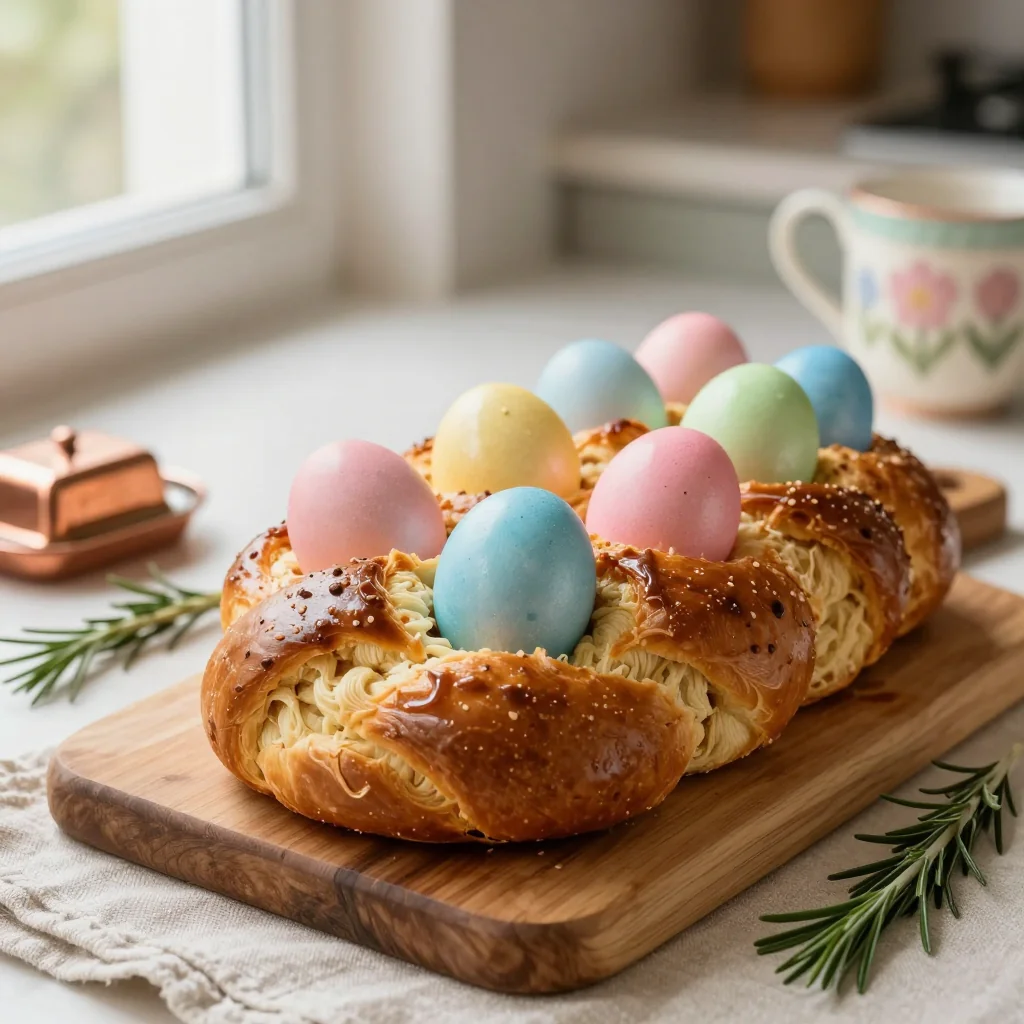
The first time I slipped a warm loaf of Italian Easter bread onto the table, the kitchen was already humming with the promise of spring. A sweet, buttery scent mingled with the bright perfume of orange zest, while the soft, pillowy crumb beckoned from the cooling rack. My grandmother’s hands, deft and confident, brushed the dough with a whisper of olive oil before tucking in a rainbow of dyed eggs—each one a tiny jewel of tradition. As the bread rose, the golden crust cracked ever so gently, releasing a faint caramel note that made my mouth water before the first bite. That moment, steeped in family laughter and the clink of pastel eggs, taught me that food can be both a celebration and a story, and I’ve been recreating that magic ever since.
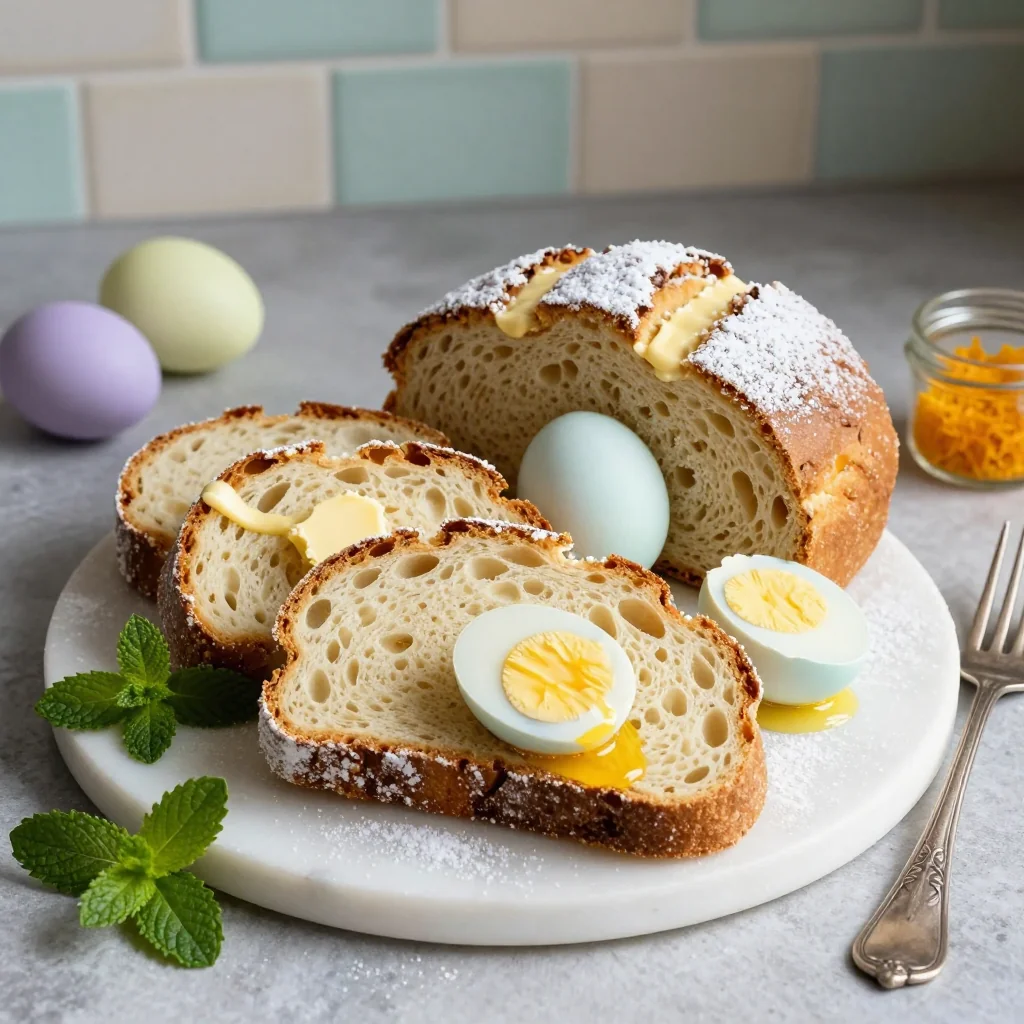
At a Glance
Why You'll Love This
This loaf is more than a dessert; it’s a centerpiece that captures the joy of Easter with every bite. The subtle citrus zing, the fragrant hint of anise, and the playful pop of colored eggs make it unforgettable.
🥚 Vibrant Presentation
Hand‑dyed eggs turn the loaf into a festive work of art that dazzles guests before the first slice.
🍊 Citrus Brightness
Orange zest lifts the buttery dough, creating a fresh, spring‑forward flavor profile.
🌾 Traditional Roots
Rooted in Italian “Pane di Pasqua,” this recipe honors centuries‑old customs while staying approachable.
🤲 Hands‑On Fun
Embedding the eggs invites family participation—perfect for creating lasting memories.
Ingredients
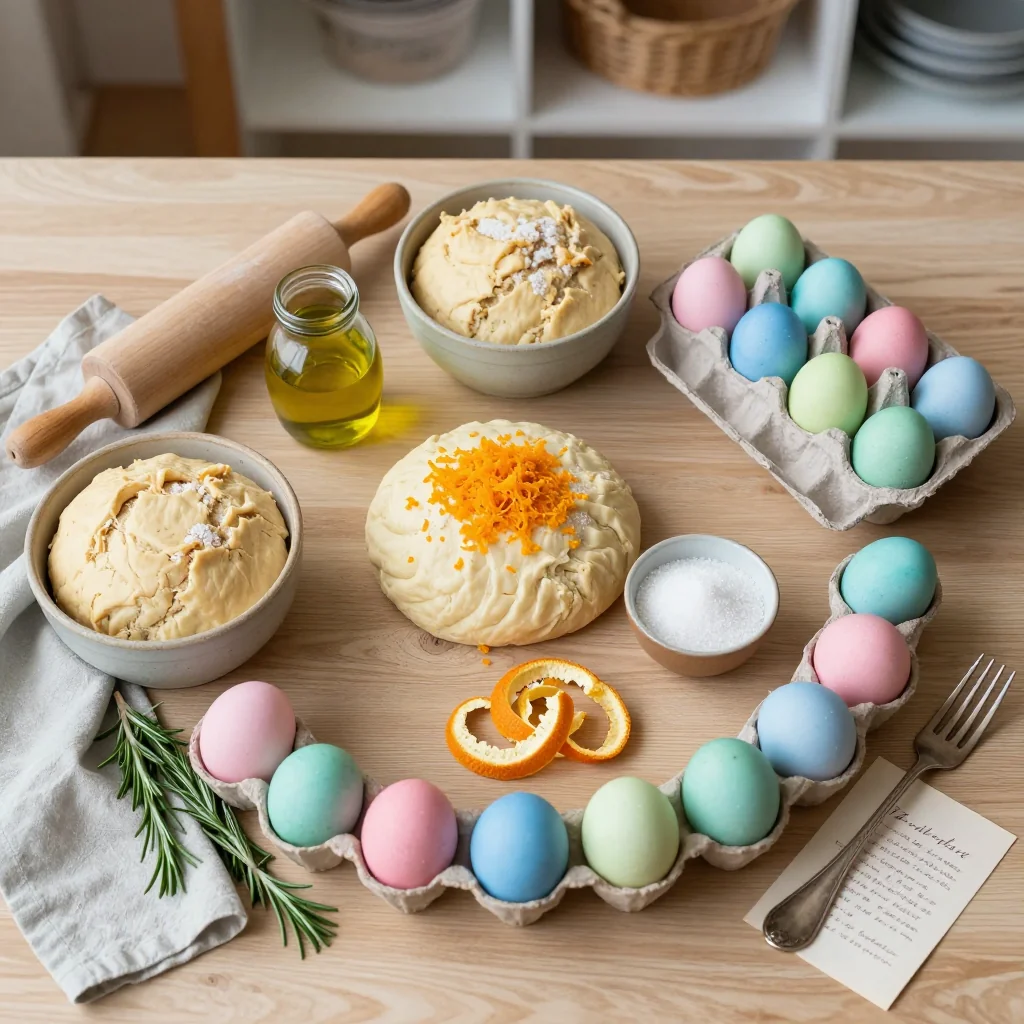
Main Ingredients
- 4 cups (500 g) all‑purpose flour
- 1 ½ cups (360 ml) warm milk
- 2 large eggs, room temperature
- ½ cup (100 g) granulated sugar
- ¼ cup (60 ml) extra‑virgin olive oil
- 2 tsp active dry yeast
- 1 tsp sea salt
- Zest of 1 large orange
- ½ cup (70 g) candied orange peel, chopped
- 12 hard‑boiled eggs, dyed
For the Glaze
- 1 egg, beaten (for egg wash)
- 2 tbsp honey
- 1 tbsp milk
- Sesame seeds (optional)
- Coarse sea salt for sprinkling
Shopping Tips
- Choose fresh, free‑range eggs for a richer yolk color before dyeing.
- Opt for a high‑quality extra‑virgin olive oil; it adds depth to the crumb.
- If candied orange peel is unavailable, finely chop a good quality marmalade.
- Buy a small bottle of food‑grade dye or use natural beet and turmeric powders for a healthier twist.
Equipment
Instructions
Activate the Yeast
In a small bowl, combine warm milk (38 °C / 100 °F) with the sugar and yeast. Stir gently and let sit for 5‑7 minutes until frothy. This step ensures the yeast is alive and ready to give the dough its lift.
Look for a light, bubbly surface—like tiny champagne bubbles.
⏱️ 7 minMix the Wet Ingredients
In the stand mixer bowl, whisk together the beaten eggs, olive oil, orange zest, and a pinch of salt. Add the frothy yeast mixture and continue whisking on low speed.
The mixture should look glossy and slightly thickened.
⏱️ 5 minIncorporate the Flour
Gradually add the flour, one cup at a time, while the mixer runs on medium speed. Once the dough begins to pull away from the sides, switch to the dough hook and knead for 8‑10 minutes.
The dough should be smooth, elastic, and slightly tacky—not sticky.
⏱️ 12 minFirst Rise
Transfer the dough to a lightly oiled bowl, cover with a damp cloth, and let it rise in a warm spot until doubled in size, about 1 hour.
A gentle puff and a faint aroma of sweet orange signals it’s ready.
⏱️ 60 minShape & Insert Eggs
Punch down the risen dough, then roll it into a rectangle (about 30 × 20 cm). Sprinkle the candied orange peel evenly, then fold the dough over the eggs, arranging them in a decorative pattern. Gently seal the edges.
The dough should wrap the eggs snugly without tearing.
⏱️ 15 minSecond Rise
Place the loaf on a parchment‑lined baking sheet, cover loosely, and let it rise again for 30‑40 minutes, until slightly puffy.
It should feel springy to the touch.
⏱️ 35 minApply the Glaze
Whisk together the beaten egg, honey, and milk. Brush the loaf generously, then sprinkle sesame seeds and a pinch of coarse sea salt for texture.
The glaze will caramelize, giving a glossy, golden crust.
⏱️ 5 minBake to Perfection
Preheat the oven to 180 °C (350 °F). Bake the loaf for 30‑35 minutes, rotating halfway, until the crust is deep amber and a tap on the bottom sounds hollow.
If the crust darkens too quickly, tent with foil.
⏱️ 35 minMaster This Technique
The secret to a tender, airy crumb lies in the “autolyse” step—mixing flour and liquid and allowing it to rest before adding yeast and salt. This simple pause hydrates the gluten strands, reducing kneading time and creating a softer texture. In this recipe we incorporate autolyse implicitly by letting the warm milk mingle with the flour for a few minutes after the yeast activation, giving the dough a head start on gluten development.
When you master this technique, you’ll notice a noticeable lift, a buttery mouthfeel, and a crust that cracks just enough to reveal that delicate interior. It’s the same principle that makes classic French brioche and Italian panettone so irresistibly light.
Chef's Tips
Use Fresh Yeast
Even a few weeks past its prime can leave the dough flat. Always proof it before mixing.
Don’t Over‑Egg
Too many eggs tighten the gluten, making the crumb dense. Stick to the recipe ratio.
Egg Dye Safety
Use food‑grade dyes and let the eggs cool completely before embedding them.
Glaze Timing
Apply the glaze just before the final bake to achieve a glossy, caramelized finish.
Cool Before Cutting
Allow the bread to rest on a wire rack for at least 20 minutes; this steadies the crumb and keeps the eggs intact.
Avoid These Mistakes
- Over‑Proofing: The dough will collapse and lose structure. Set a timer and keep the environment moderate.
- Cold Eggs: Adding chilled boiled eggs can stall the rise. Let them reach room temperature before embedding.
- Skipping the Glaze: Without the egg‑honey wash, the crust will be dull and dry.
- Too High Oven Heat: The exterior may burn before the interior cooks. Keep the temperature steady at 180 °C (350 °F).
Try These Variations
Chocolate‑Swirl
Replace candied orange peel with ½ cup dark chocolate chips and add a swirl of cocoa butter before shaping.
Herb‑Infused
Incorporate 2 tbsp finely chopped fresh rosemary and a drizzle of rosemary‑infused olive oil for an aromatic twist.
Citrus‑Zest Explosion
Add zest of lemon and lime in equal parts, and sprinkle candied citrus peel on top for a bright, tangy flavor.
What to Serve With
Side Dishes
- 🥗 Fresh arugula salad with shaved Parmesan and lemon vinaigrette
- 🧀 Assorted Italian cheeses – Pecorino, Gorgonzola, and Taleggio
- 🍅 Roasted cherry tomatoes with basil and a drizzle of aged balsamic
- 🥖 Olive‑oil brushed focaccia with rosemary
Drinks
- 🍾 Prosecco or a light Italian sparkling wine
- ☕ Freshly brewed espresso with a hint of orange peel
- 🍹 Citrus‑infused sparkling water with a sprig of mint
Storage Guide
Fridge
Up to 5 days. Keep in an airtight container; the crust stays tender.
Freezer
Up to 3 months. Slice before freezing; reheat slices directly.
Reheat
350 °F (180 °C) for 10 min or until warmed through; brush lightly with butter.
Questions & Answers
I hope this recipe brings the same sparkle to your table that it does to mine each spring. Whether you’re gathering with family or simply craving a slice of tradition, let the fragrant dough, vivid eggs, and buttery glaze tell their story. Share your creations on social media with #EasterBreadJoy—I can’t wait to see how you make it your own!
Desserts
Italian Easter Bread with Colored Eggs
Ingredients
- 4 cups all‑purpose flour
- 1 ½ cups warm milk (38 °C / 100 °F)
- 2 large eggs
- ½ cup granulated sugar
- ¼ cup olive oil
- 2 tsp active dry yeast
- 1 tsp sea salt
- Zest of 1 orange
- ½ cup candied orange peel
- 12 dyed hard‑boiled eggs
- 1 egg (egg wash)
- 2 tbsp honey
- 1 tbsp milk
- Sesame seeds & coarse sea salt (optional)
Instructions
- Activate yeast in warm milk with sugar; let froth.
- Mix wet ingredients – eggs, oil, zest, salt, and yeast mixture.
- Gradually add flour; knead 8‑10 minutes until smooth.
- First rise 1 hour until doubled.
- Shape dough, fold in candied peel and dyed eggs.
- Second rise 30‑40 minutes.
- Brush with egg‑honey glaze; sprinkle seeds.
- Bake at 180 °C (350 °F) 30‑35 minutes. Cool before serving.
Tips
- Proof yeast in warm milk for a reliable rise.
- Let the loaf rest on a wire rack to keep the crust crisp.
- Use fresh, room‑temperature eggs for even coloring.
Nutrition (per serving)
320 kcal
8 g
45 g
12 g