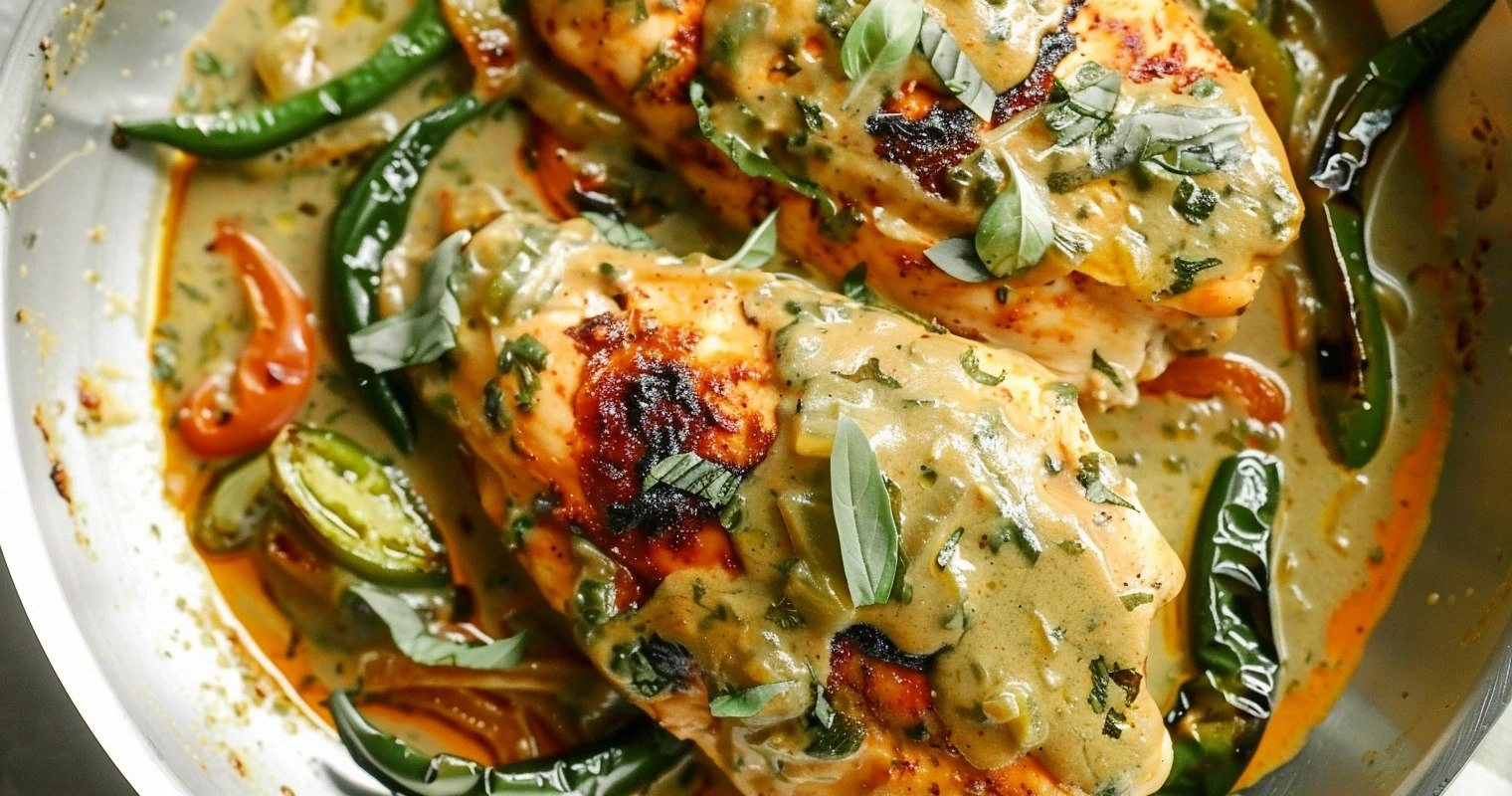
I still remember the Tuesday afternoon when I burned the first batch of peppers so badly the smoke alarm serenaded the entire apartment building. The neighbors poked their heads into the hallway, clearly wondering if they should call the fire department or just let natural selection run its course. Fast-forward three hours and those same neighbors were knocking on my door with empty plates, begging for another helping of the smoky, silky chicken poblano that had finally emerged from the chaos. That disaster-to-delight journey is exactly why I’m obsessed with this recipe—it takes a few humble ingredients, a couple of clever moves, and turns them into something that tastes like you spent the day training under a Mexican abuela. Picture this: tender chicken swimming in a creamy, gently spicy poblano sauce that coats every bite like velvet, with crispy-edged peppers that add pops of charred flavor. The scent alone is enough to make you close your eyes and sigh, the way you do when the first autumn breeze finally rolls through after a brutal summer. If you’ve never cooked with poblanos before, you’re in for a revelation. They’re the introverts of the chile world—mild mannered until you roast them, at which point they bloom into this earthy, almost tobacco-like perfume that drifts through the kitchen and hijacks every conversation. I dare you to taste this and not go back for seconds; I double-dare you to serve it at a dinner party and not get asked for the recipe before dessert hits the table. And now the fun part: let me walk you through every single step—by the end, you’ll wonder how you ever made it any other way.
What Makes This Version Stand Out
- Smoky-Not-Searing: Roasting the poblanos first gives you that campfire whisper without the five-alarm fire, so even your spice-shy cousin will dive in face-first.
- One-Pan Wonder: Everything from searing to simmering happens in the same skillet, meaning fewer dishes and more time to bask in the applause.
- Creamy Without the Calorie Bomb: A modest splash of half-and-half stretches luxuriously thanks to a light roux, so you get silk-sheet texture without the food-coma aftermath.
- Make-Ahead Magic: The sauce actually improves after a night in the fridge, so you can prep on Sunday and look like a culinary superhero on Wednesday.
- Ingredient Flexibility: Swap thighs for breast, crema for half-and-half, or toss in mushrooms; the backbone flavor still rocks.
- Restaurant-Level Plating: A final sprinkle of queso fresco and a squeeze of lime turn humble chicken into something that photographs like a magazine spread.
- Leftover Gold: Shred the remaining chicken, mix with the sauce, and you’ve got next-level enchilada filling that freezes like a dream.
Alright, let’s break down exactly what goes into this masterpiece.
Inside the Ingredient List
The Flavor Base
Poblano peppers are the co-stars here, not just supporting actors. Roast them until the skins blister and blacken in spots—yes, a few charred flecks are desirable because they add campfire complexity to the sauce. If you can only find green bell peppers, you can substitute, but you’ll miss that gentle back-of-the-throat warmth that poblanos bring to the party. Garlic and onion form the aromatic trinity, sweating down until they practically melt into the oil and leave behind a sweet, savory fog that smells like you’re walking past a street-side taquería at dusk. Cumin and oregano echo that dusty, sun-baked Mexican market vibe, but go easy—half a teaspoon each is plenty; we want subtle earthiness, not a spice rack explosion.
The Texture Crew
Chicken thighs stay juicier than breast meat, especially after a leisurely simmer in the creamy poblano sauce. Trim the excess fat but leave a little on; it renders and mingles with the oil to create a self-basting situation that keeps every fiber moist. If you’re a die-hard white-meat fan, go ahead and use breast, but promise me you’ll pull it off the heat the instant it hits 160°F—dry chicken is a tragedy we can avoid with one cheap thermometer. A light dusting of flour on the chicken before searing helps thicken the sauce later, plus it gives you those gorgeous mahogany bits stuck to the pan that we’ll deglaze into liquid gold.
The Unexpected Star
Here’s the curveball: a single teaspoon of smoked paprika amplifies the roasted pepper flavor without announcing itself. It’s like adding a backing track that makes the lead singer hit higher notes—nobody knows why the song slaps harder, but it does. Mexican crema is traditional, yet half-and-half works if that’s what’s already in your fridge; the trick is warming it gently so it doesn’t break into a grainy mess. A pat of butter swirled in at the end lends glossy body and rounds any sharp edges, making the sauce coat a spoon like liquid suede.
The Final Flourish
Fresh lime juice wakes everything up the way your favorite song blasts through Monday morning fog. Queseso fresco adds a salty pop and pleasant crumble, though crumbled feta will do in a pinch—just use less salt elsewhere because feta brings its own brine party. A shower of cilantro leaves looks gorgeous, but if you’re genetically predisposed to think cilantro tastes like soap, swap in thin-sliced green onions for a similar fresh bite. And hey, if you want to gild the lily, a few pickled red onions on top add electric color and tangy crunch that cut through all that creamy richness.
Everything’s prepped? Good. Let’s get into the real action.
The Method — Step by Step
- Crank your oven to 450°F and line a sheet pan with foil—yes, we’re going full blast because we want the poblano skins to blister fast, not steam into rubbery sadness. Lay the peppers out like sunbathers, drizzle with a whisper of oil, and slide them onto the highest rack. After about 12 minutes, the skins should puff and char; rotate them with tongs so every side gets a suntan. Your kitchen will fill with a scent that’s part roasted corn, part campfire, and 100 percent intoxicating. Once they’re uniformly blistered, seal the hot peppers in a bowl covered with plastic wrap for 10 minutes—the captured steam loosens the skins like a spa treatment for chiles.
- While the peppers chill under their steam blanket, pat the chicken thighs dry with paper towels; moisture is the enemy of a golden crust. Season both sides with salt, pepper, and the tiniest hint of cumin—remember, we’re layering flavor, not building a spice fortress. Dredge lightly in flour and shake off the excess so it’s just a dusting, like the first November snow that barely coats the sidewalk. Heat a large skillet over medium-high until a drop of water skitters across the surface like it’s late for a meeting. Add a swirl of oil, lay the chicken in skin-side down, and do not touch it for four full minutes; that sizzle when it hits the pan? Absolute perfection.
- When the chicken releases willingly and the underside looks like a bronzed sunset, flip and cook another three minutes, then transfer to a plate. The pan should now sport a Jackson Pollock of golden-brown speckles—those are flavor nuggets begging to become sauce. Lower heat to medium, toss in the diced onion, and scrape like you’re mad at it; the moisture lifts the fond and turns it into an instant flavor concentrate. After three minutes, add the minced garlic and cook just until you can smell it, about 45 seconds—garlic burns faster than gossip spreads, so stay present.
- Okay, ready for the game-changer? Strip the skins off the poblanos; they should slide away like silk stockings. Don’t rinse under water—yes, a few stubborn flecks are fine and add smoky character. Slice the peeled peppers into thin ribbons, letting the grassy, subtly sweet aroma fill your workspace. Stir these emerald strips into the skillet with the onions and let them sizzle for a minute so the flavors intermingle like old friends at a reunion. Sprinkle in the smoked paprika and oregano, toasting them for 30 seconds until the mixture smells like you’ve teleported to Oaxaca.
- Sprinkle a tablespoon of flour over the veggie party, stirring constantly to coat; this quick roux will thicken the sauce later and prevent any raw flour taste from hijacking the dish. Cook for one minute—it should look like pasty confetti clinging to the peppers, which is exactly what we want. Slowly pour in the chicken stock, whisking or stirring with a wooden spoon to dissolve the roux and scrape every last bit of flavor off the pan. The mixture will seize at first, then relax into a velvety gravy that smells like Sunday supper at your favorite abuela’s house. Bring to a gentle simmer and let it burble for two minutes so the raw flour taste cooks out.
- Stir in the half-and-half, watching the pale green sauce lighten to the color of pistachio ice cream. Nestle the chicken back into the skillet, skin side up so the crispy skin stays proud above the liquid. Reduce heat to low, cover partially, and let the whole thing simmer for 15 minutes—set a timer because this is the moment of truth where flavors meld and the chicken finishes cooking to that juicy 175°F sweet spot. The sauce should thicken enough to coat the back of a spoon; if it looks too thin, remove the lid for the last five minutes to let steam escape.
- Uncover and marvel at how the once-separate elements have fused into a cohesive, glossy masterpiece. Taste the sauce and adjust salt; it might need a pinch more because dairy can dull seasoning. Squeeze in half a lime and watch the flavors snap to attention like soldiers on inspection day. Swirl in the cold butter for extra sheen, then shower with cilantro or green onions, and finish with crumbled queso fresco. Serve straight from the skillet with warm tortillas, rice, or crusty bread—anything that can drag through that dreamy sauce.
That’s it—you did it. But hold on, I’ve got a few more tricks that’ll take this to another level.
Insider Tricks for Flawless Results
The Temperature Rule Nobody Follows
Most home cooks crank the heat too high, thinking a violent boil equals faster flavor; in reality, it toughens the chicken and splits the dairy. Keep the sauce at the gentlest simmer where only a few lazy bubbles break the surface—think hot-tub temperature, not jacuzzi jets. A friend tried skipping this step once; let’s just say it didn’t end well, and we ended up ordering pizza while the sauce glared at us from the stovetop. If you’re nervous, park a heat diffuser under the skillet or shift the pan halfway off the burner; you’ll maintain silky perfection without babysitting the dial.
Why Your Nose Knows Best
Smell is your built-in kitchen timer. When the garlic first hits the fat, it should smell sweet and earthy; the moment it turns sharp or acrid, you’ve crossed into bitter territory and there’s no coming back. Same with the roux: you want a faint cookie aroma, signaling the flour has toasted properly. Trust those olfactory cues more than the clock—ovens vary, skillets vary, but your nose is beautifully consistent once you tune in.
The 5-Minute Rest That Changes Everything
After the chicken is cooked, let the skillet sit off heat for five minutes before serving; this allows the juices to redistribute so the meat stays moist even after you slice it. Meanwhile, the sauce thickens slightly as it cools, clinging more luxuriously to each piece. Cover loosely with foil so it stays warm but doesn’t continue cooking—think of it as a power nap for poultry.
Creative Twists and Variations
This recipe is a playground. Here are some of my favorite ways to switch things up:
Seafood Spin
Swap the chicken for peeled shrimp and reduce simmer time to three minutes—any longer and they’ll curl into rubber bullets. Add a handful of sweet corn kernels for pops of sunshine against the pale green sauce. Finish with a dusting of ancho chile powder for a smoky echo of the original poblanos.
Mushroom Lover’s Dream
Skip the meat entirely and sear a mix of cremini and oyster mushrooms until their edges caramelize. Use vegetable stock and a splash of soy sauce for umami depth; the result tastes like vegetarian comfort food wearing a leather jacket. A sprinkle of toasted pepitas adds crunch and nods to the pepper’s heritage.
Tex-Mex Mash-Up
Stir in a cup of shredded pepper jack and a drained can of Rotel tomatoes for a queso-style vibe that begs for tortilla chips. Serve straight from the skillet as a party dip, keeping the flame on low so the cheese stays molten and guests keep hovering like moths to a porch light.
Breakfast Upgrade
Reheat leftovers, crack four eggs right into the sauce, cover, and let them poach for six minutes. Drag toast through the runny yolk and poblano gravy, and you’ve effectively turned last night’s dinner into a brunch that could sell out cafés.
Storing and Bringing It Back to Life
Fridge Storage
Cool the skillet completely, then transfer chicken and sauce to an airtight container; it keeps for up to four days without the flavors muddying. Press a piece of plastic wrap directly onto the surface to prevent a skin from forming—nobody wants rubbery pepper film in tomorrow’s lunch. Store any extra queso fresco separately so it stays crumbly and doesn’t dissolve into a salty blob.
Freezer Friendly
Portion the cooled mixture into quart-size freezer bags, squeeze out excess air, and freeze flat for up to three months. Thaw overnight in the fridge or submerge the sealed bag in cold water for quicker revival. The sauce may separate slightly upon thawing; just warm gently and whisk in a tablespoon of water or stock to bring it back together.
Best Reheating Method
Slide the chicken and sauce into a skillet with a splash of stock, cover, and warm over medium-low heat until just heated through—about eight minutes. Avoid the microwave if you can; it overheats the dairy and turns the sauce grainy. If you must zap, do it at 50 percent power in 30-second bursts, stirring between each to keep the texture silky.