
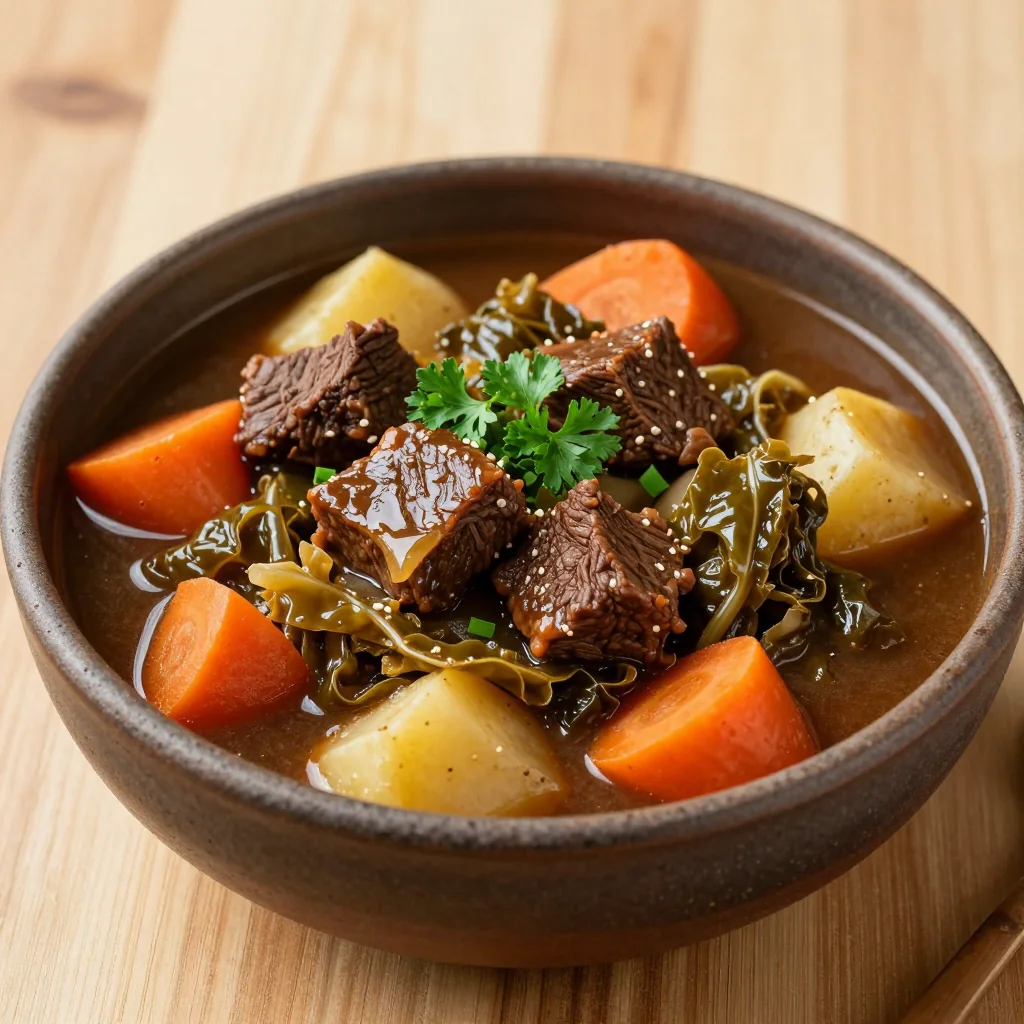
Love this? Pin it for later! 📌
I first started making this stew during the polar-vortex winter of 2014, when Chicago hit –16 °F and the city’s official advice was “don’t breathe too deeply when you walk outside.” My husband and I had just moved into a 1906 bungalow with single-pane windows and a furnace that wheezed like an asthmatic cat. I bought a 5-pound chuck roast because it was on sale and a head of cabbage because it was cheap and practically indestructible. What emerged three hours later was the kind of stew that makes you close your eyes after the first spoonful—thick, deeply beefy, sweet with cabbage and carrots, and scented with bay leaf and sweet paprika. We ate it cross-legged on the living-room floor while the radiator clanked like a tambourine and the dog hovered hopefully, tail thumping. Eight winters later, it’s still our first snow-day tradition; I make a double batch every New Year’s Day so we can portion it into quart jars and freeze it for the months ahead. If you’ve got a Dutch oven, a sharp knife, and a quiet afternoon, you’ve got everything you need to turn the humblest ingredients into the culinary equivalent of a down comforter.
Why This Recipe Works
- Two-Stage Browning: Searing the beef in batches creates a fond that seasons the entire stew.
- Cabbage Layering: Adding half the cabbage early for sweetness, the rest at the end for texture.
- Paprika & Tomato Paste: A 60-second bloom in the fat turns ordinary broth into velvet.
- Low-and-Slow Oven Finish: Transfers heat from every direction for fork-tender meat without stirring.
- Make-Ahead Friendly: Flavor actually improves overnight; reheats beautifully on stove or microwave.
- One-Pot Wonder: Dutch oven does everything; minimal dishes when you’d rather be under a blanket.
Ingredients You'll Need
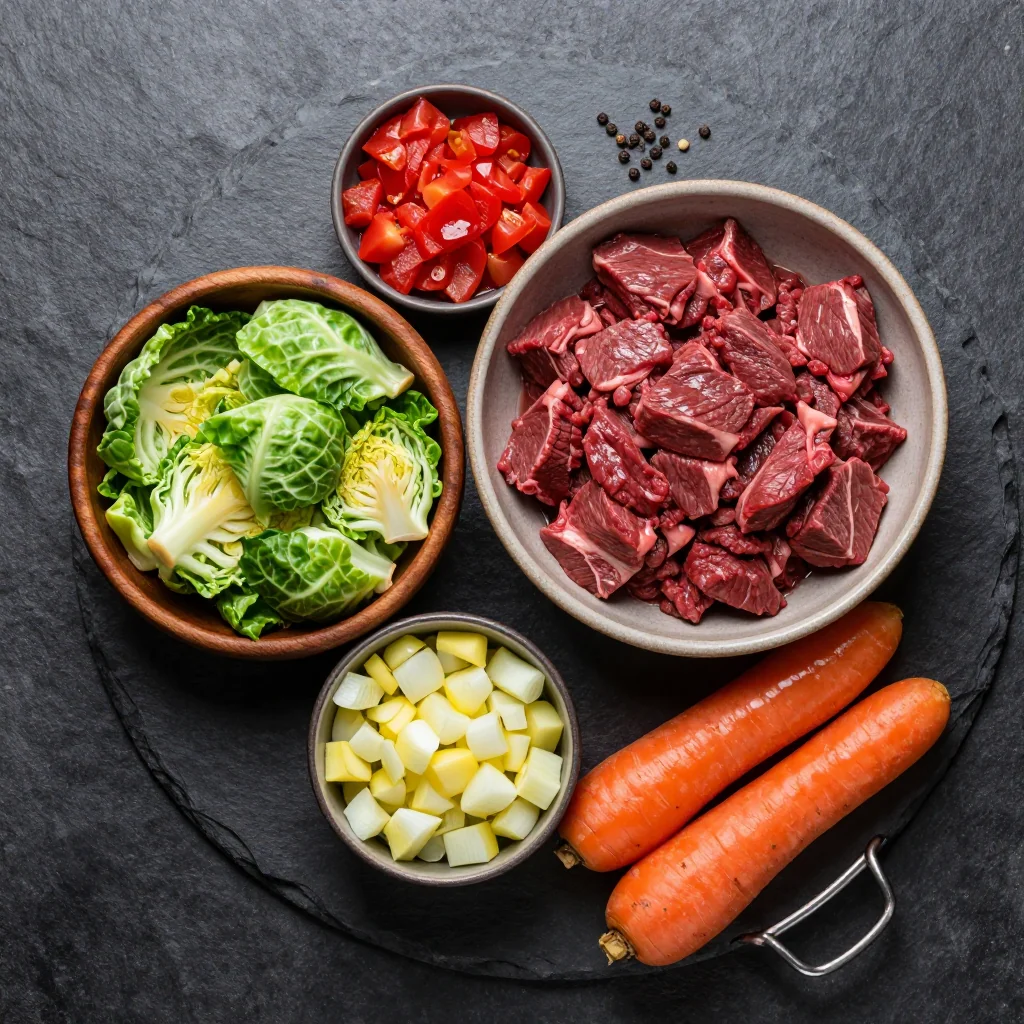
Great stew starts at the butcher counter, not in the spice aisle. Look for a well-marbled chuck roast—ideally the top blade or “flat-iron” section. You want white striations running through deep-red meat; that intramuscular fat melts into collagen and gives the broth its lip-sticking richness. If you can’t find chuck, round works, but add 30 minutes to the cook time and an extra splash of broth. For the cabbage, choose a tight, pale-green head that feels heavier than it looks. Avoid the pre-shredded bags; they’ve lost moisture and will go limp like confetti.
Carrots should be slender and young—no larger than your thumb—so they stay sweet and don’t need peeling, just a quick scrub. Yellow onions are traditional, but if you’ve got a few shallots languishing in the pantry, they add a delicate sweetness. Tomato paste in a tube is a lifesaver; it keeps for months and lets you use just a tablespoon without opening a whole can. Sweet Hungarian paprika (not smoked) gives the broth a subtle peppery backbone without heat; if yours has been in the cupboard since last winter, spring for a fresh tin—the volatile oils fade faster than you think. Finally, a single bay leaf, preferably Turkish, which has softer edges and a tea-like fragrance compared to the sharper California variety.
How to Make Hearty Beef and Cabbage Stew for a Cold January Night
Cut 3½ lb chuck roast into 1½-inch cubes, leaving some of the fat cap attached. Transfer to a bowl, season with 2 tsp kosher salt and 1 tsp black pepper, and toss with 2 Tbsp all-purpose flour until evenly coated. The flour will help develop a deep crust and later thicken the stew.
Heat 2 Tbsp canola oil in a 5–6 qt Dutch oven over medium-high until shimmering. Add one-third of the beef in a single layer; don’t crowd or it will steam. Sear 2–3 min per side until a chestnut crust forms. Transfer to a plate. Repeat with remaining beef, adding another Tbsp oil if the pot looks dry.
Lower heat to medium. Add 2 cups diced onion and cook 4 min, scraping the fond with a wooden spoon. Stir in 3 minced garlic cloves and 2 Tbsp tomato paste; cook 1 min until the paste darkens to brick red. Sprinkle 2 tsp sweet paprika and ½ tsp caraway seeds (optional but authentic); toast 30 sec until fragrant.
Pour in ½ cup dry red wine (Cabernet or whatever’s open) and 1 Tbsp Worcestershire. Boil 2 min, stirring to lift every browned bit. The liquid will reduce to a syrupy glaze that clings to the vegetables—this concentrates flavor and removes any raw alcohol edge.
Return beef and any juices to the pot. Add 4 cups low-sodium beef broth, 2 cups water, 2 bay leaves, and half the shredded cabbage (about 4 cups). The cabbage will collapse and naturally sweeten the broth; the second addition later keeps some texture.
Cover with a tight lid and transfer to a 325 °F oven. Braise 1½ hours. Stir in 3 large carrots cut into ½-inch coins and continue cooking 45 min. The gentle, enveloping heat of the oven prevents scorching and allows collagen to break down into silky gelatin.
Remove pot from oven; discard bay leaves. Stir in remaining cabbage, cover, and let stand 10 min—the residual heat softens it just enough to stay vibrant. Taste and adjust salt (you may need another ½ tsp) and freshly ground black pepper. If you prefer a thicker stew, simmer on stovetop 5 min.
Ladle into deep bowls over buttered rye bread or plain boiled potatoes. Shower with chopped parsley or dill and a spoonful of sour cream that melts into creamy rivulets. Leftovers reheat like a dream and freeze up to 3 months.
Expert Tips
Chill & Skim
Make the stew a day ahead; refrigerate overnight and lift off the solidified fat. You’ll get a cleaner broth while keeping all the flavor.
Wine Swap
No wine? Substitute ½ cup beef broth plus 1 Tbsp balsamic vinegar for acidity and depth.
Pressure-Cooker Shortcut
In a multi-cooker, sear on sauté, then cook on high pressure 35 min; natural release 10 min before adding final cabbage.
Color Boost
Add 1 cup diced red bell pepper with the carrots for flecks of color and a gentle fruity note.
Freezer Portions
Freeze in silicone muffin cups; pop out half-cup pucks and store in zip bags for single-serving lunches.
Bright Finish
A splash of lemon juice or a teaspoon of cider vinegar at the end brightens the long-cooked flavors.
Variations to Try
Hungarian Goulash-Style
Swap paprika for 2 Tbsp hot Hungarian paprika, add 1 tsp marjoram and a diced tomato; serve with csipetke noodles.
Mushroom Lovers
Stir in 8 oz sautéed cremini mushrooms during the last 30 min for an earthy boost and extra umami.
Low-Carb/Keto
Omit carrots, use turnips or radishes instead; thicken with ½ tsp xanthan gum instead of flour.
Vegetarian Twist
Replace beef with 2 cans chickpeas and 1 lb mushrooms; substitute vegetable broth and add 1 Tbsp soy sauce for depth.
Storage Tips
Refrigerating: Cool stew completely, then transfer to airtight containers. It keeps 4 days in the fridge; flavors meld and intensify each day.
Freezing: Ladle into quart-size freezer bags, press out excess air, and freeze flat on a sheet pan; once solid, stack like books. Use within 3 months for best texture.
Reheating: Thaw overnight in fridge. Warm gently on stovetop over low heat, adding a splash of broth or water to loosen. Microwave works too—use 50 % power and stir every minute to avoid hot spots.
Make-Ahead Meal Prep: Double the recipe and portion into 2-cup Mason jars for grab-and-go lunches; keep a few unfrozen for the week ahead and freeze the rest.
Frequently Asked Questions
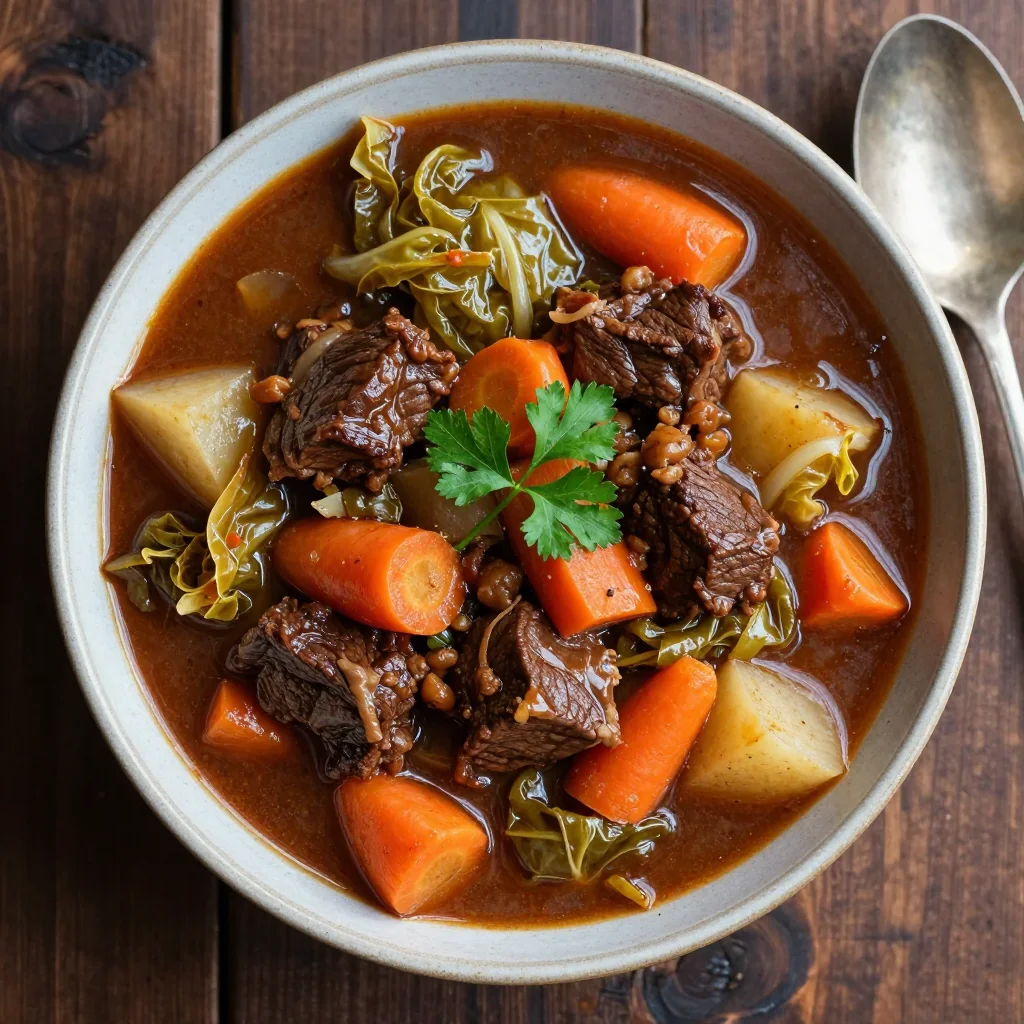
Hearty Beef and Cabbage Stew for a Cold January Night
Ingredients
Instructions
- Season & Dredge: Toss beef with salt, pepper, and flour until coated.
- Sear: Brown beef in hot oil in batches; set aside.
- Aromatics: Cook onion 4 min; add garlic, tomato paste, paprika, and caraway; cook 1 min.
- Deglaze: Add wine and Worcestershire; boil 2 min, scraping fond.
- Simmer: Return beef, add broth, water, bay leaves, and half the cabbage. Cover and bake at 325 °F 1½ hr.
- Add Veg: Stir in carrots; bake 45 min more.
- Finish: Off heat, stir in remaining cabbage; rest 10 min. Adjust seasoning, garnish, and serve hot.
Recipe Notes
Stew thickens as it stands; thin with broth when reheating. Flavor peaks on day 2, making it the ultimate prep-ahead comfort food.