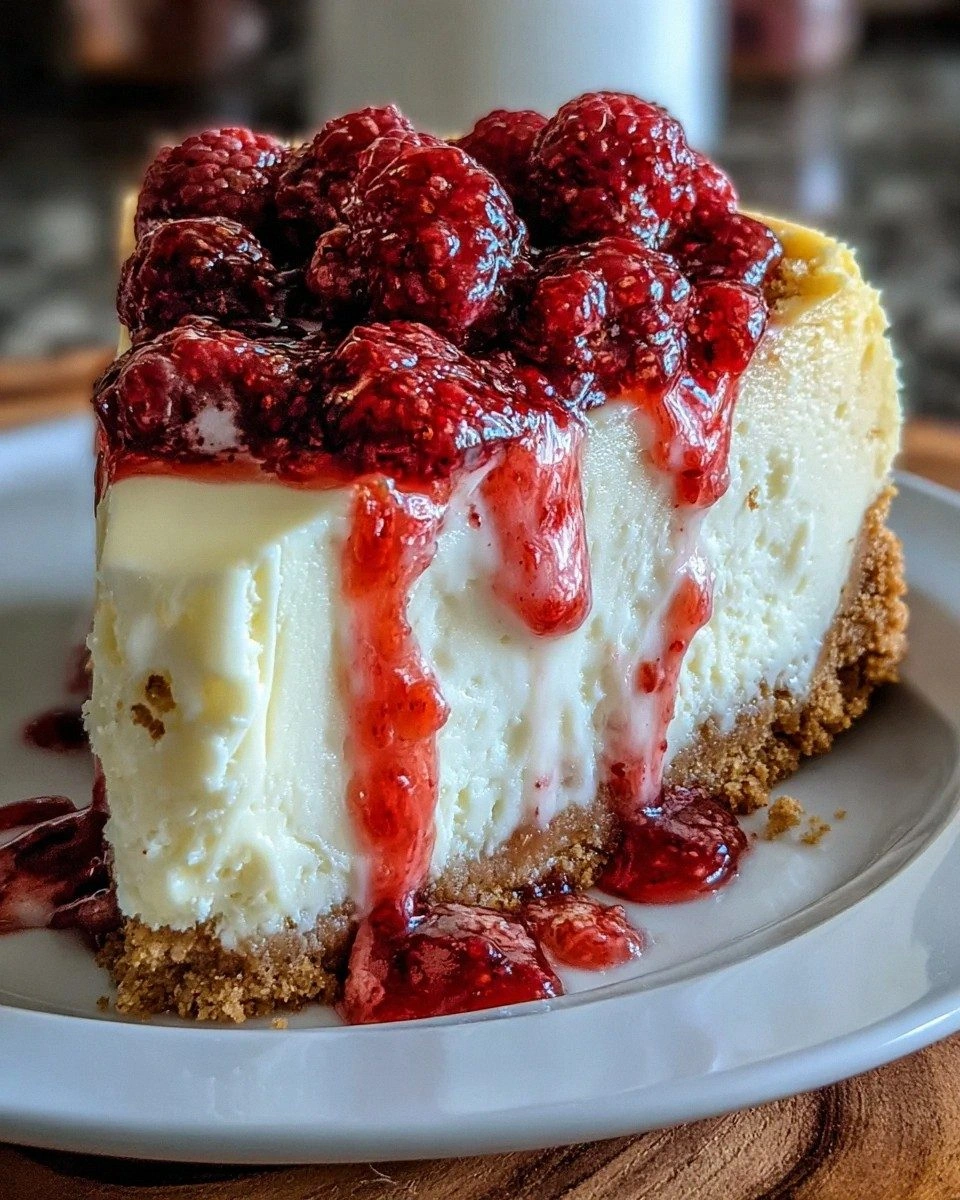
I was standing in my kitchen on a rainy Tuesday, staring at a half‑finished raspberry jam and a bar of white chocolate that had somehow melted into a sticky puddle on the counter. I swear the universe was daring me to create something that could turn that mess into a masterpiece, and I took the challenge. The air smelled like a summer garden after a thunderstorm—sweet, a little tart, and undeniably inviting. My mind was already racing with images of a creamy cheesecake that would melt in your mouth like a cloud, while bright raspberry ribbons swirled through it like fireworks against a midnight sky.
Fast forward a few hours, and I was juggling a crust that crunched like fresh snow underfoot, a silky filling that shone like polished ivory, and a raspberry‑white‑chocolate sauce that glistened like liquid sunrise. The whole kitchen turned into a symphony: the whirr of the mixer, the gentle pop of butter melting, the soft sigh of the oven door closing. I could hear the faint crackle of the crust setting, feel the cool metal of the springform pan, and taste the promise of tangy raspberries meeting buttery white chocolate. This isn’t just another cheesecake; it’s a full‑on sensory experience that makes you feel like you’ve stepped into a dessert‑lover’s dream.
Why does this version stand out from the sea of cheesecake recipes flooding the internet? Most recipes either drown the berries in a sugary swamp or hide the white chocolate behind a veil of heavy cream, never letting its delicate sweetness truly shine. I’ve cracked the code by using high‑quality white chocolate that melts into the filling, letting its buttery silk coat each bite, while the raspberry sauce stays bright, thanks to a splash of lemon juice that cuts through the richness. The secret? A double‑bake technique that gives you a perfectly set center without the dreaded crack‑and‑wiggle disaster. I dare you to taste this and not go back for seconds.
Okay, ready for the game‑changer? I’m about to spill the beans on a tiny trick that will make your crust stick to the pan like a loyal sidekick, and a quick method for tempering white chocolate without any fancy equipment. By the end of this post, you’ll have a cheesecake that looks and tastes like it was baked by a pastry chef with a secret stash of culinary magic. Let me walk you through every single step — by the end, you’ll wonder how you ever made it any other way.
What Makes This Version Stand Out
- Flavor Harmony: The bright acidity of raspberries balances the buttery sweetness of white chocolate, creating a dance on the palate that feels both indulgent and refreshing.
- Texture Triple Threat: A buttery, crunchy crust, a luxuriously smooth filling, and a glossy raspberry swirl give you three distinct textures in every forkful.
- Simplicity Meets Sophistication: Despite the elegant flavor profile, the ingredient list is short, and the steps are straightforward enough for a confident home cook.
- Unique Ingredient Pairing: White chocolate rarely meets cheesecake, but here it melds perfectly, delivering a silk‑like mouthfeel that ordinary dark‑chocolate versions can’t match.
- Crowd‑Pleaser Factor: Whether it’s a birthday, a dinner party, or a quiet night in, this cake earns applause, and you’ll hear “wow” from every guest.
- Ingredient Quality: Using premium white chocolate and fresh raspberries elevates the entire dish; you’ll taste the difference in every bite.
- Bake‑Smart Technique: The water‑bath (bain‑marie) method prevents cracks and ensures an even, creamy set without over‑cooking.
- Make‑Ahead Magic: This cheesecake can be assembled a day ahead, chilled, and still taste as fresh as the moment it left the oven.
Inside the Ingredient List
The Flavor Base
Fresh or frozen raspberries: These berries are the star of the show, offering vibrant flavor and color. If you use frozen, let them thaw and drain excess juice to avoid a soggy swirl. Skipping them means losing the bright tartness that cuts through the richness.
Lemon juice: A dash of tartness that brightens the raspberry sauce, enhancing its flavor. It also helps preserve the vivid pink hue during baking. If you leave it out, the sauce can taste flat and dull.
White chocolate: Opt for high‑quality chocolate; it makes all the difference in taste. The creaminess marries beautifully with the tart raspberries, creating a silky contrast. Low‑grade chocolate will introduce a waxy texture and a cloying sweetness.
The Texture Crew
Cream cheese: The base of our cheesecake, providing that luscious creamy texture. It must be softened to room temperature, otherwise you’ll end up with lumps that ruin the silky finish. Substituting with a lower‑fat version will make the filling dry and crumbly.
Heavy cream: For that luxurious, velvety texture that you should expect from a cheesecake. It adds richness without making the filling too dense. Skipping it leads to a firmer, less airy bite.
Sour cream: This ingredient lends a slight tanginess and creaminess, making every bite heavenly. It also helps prevent cracking by adding moisture. If you replace it with plain yogurt, you’ll lose some of that subtle tang.
The Unexpected Star
Granulated sugar: This sweetener helps balance the tangy raspberries and adds sweetness to the crust and filling. Too much sugar can make the crust overly caramelized; too little leaves the filling bland.
Melted butter: It binds the graham cracker crumbs together and adds richness. Use unsalted butter so you can control the overall salt level. If the butter is too cold, the crust won’t hold together.
The Final Flourish
Graham cracker crumbs: A crispy, buttery base that provides the perfect crunch. Toast them lightly for extra depth, but don’t over‑bake or they’ll turn bitter. Skipping the crumb base entirely removes the textural contrast that makes this cheesecake unforgettable.
Vanilla extract: A classic flavor enhancer that adds depth to the cheesecake. Real vanilla beans give a more complex aroma, but a good quality extract works fine. Forgetting it leaves the filling tasting one‑dim.
Eggs: They give the cheesecake structure and help it set properly. Over‑beating can incorporate too much air, leading to cracks. Under‑mixing leaves a grainy texture.
Extra raspberry sauce or fresh berries: Optional, but highly recommended for garnishing and a burst of flavor when serving. It adds a fresh pop that lifts the whole dessert. Skipping garnish is fine, but you’ll miss that final wow factor.
Everything's prepped? Good. Let's get into the real action...
The Method — Step by Step
Preheat your oven to 325°F (163°C) and place a large roasting pan on the lower rack. Fill the pan with hot water about an inch deep to create a gentle steam bath. This water‑bath (or bain‑marie) is the secret that keeps the cheesecake from cracking and gives it that coveted, velvety sheen. While the water heats, line the bottom of a 9‑inch springform pan with parchment paper to prevent sticking.
Combine the graham cracker crumbs, ¼ cup granulated sugar, and melted butter in a mixing bowl. Stir until the mixture resembles wet sand. Press the crumb mixture firmly into the bottom of the springform pan using the back of a measuring cup, making sure the edges are even. Power transition: This is the moment where the crust becomes a solid foundation, so don’t rush it.
Kitchen Hack: Chill the pressed crust for 10 minutes before adding the filling; this prevents the crust from melting into the batter.While the crust chills, melt the white chocolate in a heat‑proof bowl over a simmering pot of water (double boiler). Stir gently until smooth, then remove from heat and let it cool just a touch— you don’t want it hot enough to scramble the eggs later. A quick tip: add a teaspoon of butter to the melt for an extra glossy finish.
In a large bowl, beat the softened cream cheese until it’s silky and free of lumps, about 2 minutes on medium speed. Add the remaining granulated sugar and continue beating until the mixture lightens in color. This aeration step is crucial; it creates that airy texture we all crave.
Gradually add the cooled white chocolate to the cream cheese mixture, followed by the heavy cream, sour cream, and vanilla extract. Mix on low speed until everything is just combined—over‑mixing will incorporate too much air, which can cause cracks during baking. This next part? Pure magic.
In a separate bowl, whisk together the raspberries, lemon juice, and a tablespoon of sugar. Mash lightly with a fork, then strain through a fine‑mesh sieve to remove seeds, leaving a smooth raspberry purée. Set aside half for the swirl and keep the other half for garnish.
Pour half of the cheesecake batter onto the chilled crust, then drizzle half of the raspberry purée over it. Use a skewer or the tip of a knife to create a marbled swirl—don’t over‑mix, you want distinct ribbons of pink. Repeat with the remaining batter and raspberry purée, creating a layered effect that looks as good as it tastes.
Watch Out: If the batter is too warm, the swirl will melt into a uniform pink. Chill the batter for 5 minutes before swirling to keep the colors distinct.Place the springform pan into the prepared water‑bath, then slide it into the oven. Bake for 45‑50 minutes, or until the edges are set but the center still has a slight jiggle—think of a soft‑boiled egg. Resist the urge to open the oven door; the steam inside is essential for a crack‑free surface.
Turn off the oven, crack the door open a crack, and let the cheesecake cool inside for 1 hour. This gradual cooling prevents sudden temperature changes that cause cracks. Afterward, run a thin knife around the edge of the pan, release the springform, and chill the cake in the refrigerator for at least 4 hours, preferably overnight.
That's it — you did it. But hold on, I've got a few more tricks that'll take this to another level...
Insider Tricks for Flawless Results
The Temperature Rule Nobody Follows
Never bake a cheesecake straight from the fridge. Let the batter sit at room temperature for 15‑20 minutes before it meets the oven. This small step evens out the temperature, which means the edges won’t set too quickly while the center remains liquid. I once baked a chilled batter and ended up with a cracked, uneven top—lesson learned.
Why Your Nose Knows Best
When the cheesecake is done, it gives off a faint, sweet aroma that’s unmistakable. If you can smell the buttery white chocolate mingling with a hint of raspberry, you’re golden. Trust this nose cue more than a timer; ovens vary, and the scent tells you exactly when the interior is set but still creamy.
The 5‑Minute Rest That Changes Everything
After removing the cheesecake from the water‑bath, let it rest on the counter for five minutes before moving it to the fridge. This short pause allows the residual heat to dissipate evenly, reducing the risk of a sudden temperature shock that can cause cracks. A friend tried to rush this step once and ended up with a split top—never skip it.
Garnish with Purpose
Instead of just tossing fresh berries on top, brush a thin layer of the reserved raspberry sauce over the chilled cheesecake, then arrange whole raspberries in a decorative pattern. The glaze adds shine, while the whole berries give a burst of fresh flavor right before the first bite. It’s a visual cue that tells diners, “this dessert is worth savoring.”
The Ultimate Chill Hack
If you’re short on time, you can freeze the cheesecake for 30 minutes after it has cooled to room temperature, then finish the refrigeration step. This speeds up the setting process without compromising texture. Just be sure to cover it tightly with plastic wrap to prevent freezer burn.
Creative Twists and Variations
This recipe is a playground. Here are some of my favorite ways to switch things up:
Chocolate‑Raspberry Fusion
Swap half of the white chocolate for dark chocolate (70% cacao). The bittersweet notes complement the raspberries, creating a richer, more complex flavor profile. Perfect for chocolate lovers who still crave that berry brightness.
Citrus Burst
Add a teaspoon of orange zest to the raspberry purée and replace the lemon juice with lime juice. The citrus twist lifts the whole dessert, making it feel lighter and more summery. Ideal for a brunch setting.
Nutty Crunch
Fold in ¼ cup toasted almond slivers into the crust mixture, or sprinkle them on top before baking. The nutty crunch adds another texture layer and a subtle earthiness that balances the sweet creaminess.
Vegan Velvet
Replace cream cheese with a vegan cream cheese alternative, use coconut cream in place of heavy cream, and swap butter for coconut oil in the crust. The result is a dairy‑free version that still delivers the same luxurious mouthfeel.
Spiced Autumn
Incorporate a pinch of ground cinnamon and a dash of nutmeg into the filling. Pair with a drizzle of caramel sauce for a warm, cozy dessert that feels perfect for cooler evenings.
Storing and Bringing It Back to Life
Fridge Storage
Cover the cheesecake loosely with plastic wrap or a cake dome and store it in the refrigerator for up to 5 days. The flavors continue to meld, making each successive slice even more harmonious. If you notice condensation, pat the surface gently with a paper towel before serving.
Freezer Friendly
Slice the cheesecake into wedges, wrap each piece tightly in parchment paper followed by aluminum foil, and freeze for up to 2 months. To defrost, transfer the slice to the fridge overnight; this slow thaw preserves the creamy texture.
Best Reheating Method
Cheesecake rarely needs reheating, but if you want a warm serving, place a slice on a microwave‑safe plate, add a tiny splash of water (about a teaspoon), and microwave on low for 15‑20 seconds. The steam revives the creaminess without cooking the cheese further.