I was staring at a half‑cooked salmon fillet on my stove, the pan sizzling with a hint of garlic, when the kitchen alarm rang off the counter. I’d been trying to impress a friend who swears she can cook anything, but I had only a few minutes and a handful of ingredients. The moment the alarm clicked, I thought, “What if I just let everything roast together on a sheet pan?” The result was a sheet pan salmon and vegetable that tasted like a Mediterranean sunset in a single bite. I dare you to taste this and not go back for seconds.
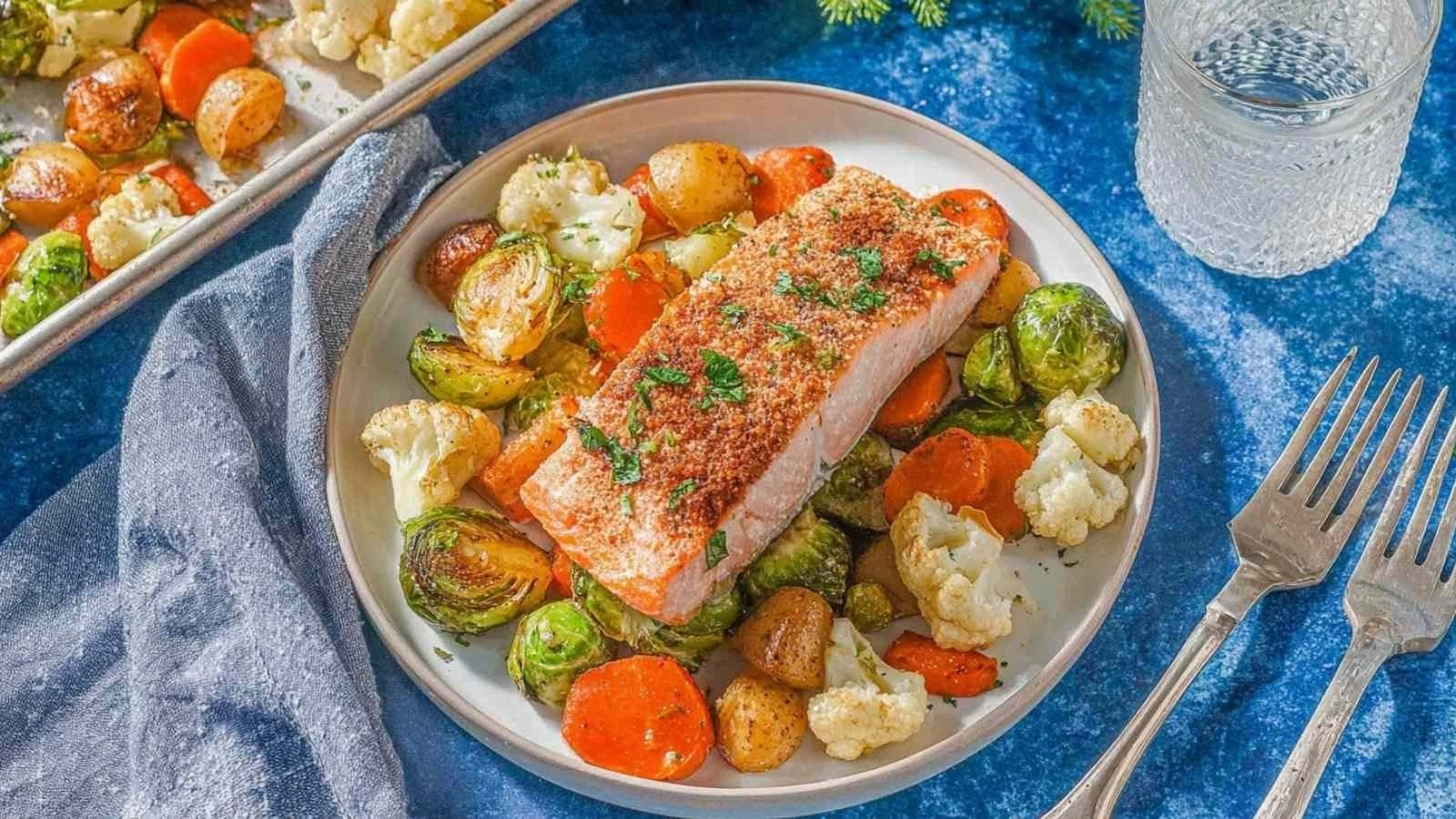
The first thing you notice is the golden crust that forms on the salmon, the edges crisping like thin ice that shatters with a satisfying snap. The cauliflower florets and carrots develop a caramelized glaze that feels like a buttery, sweet caramel, while the olive oil coats every piece with a glossy sheen. The air is filled with the smoky aroma of paprika mingling with the bright, citrusy tang of lemon, punctuated by the earthy, peppery bite of baharat. The texture is a delightful contrast: tender fish, crisp vegetables, and a hint of briny olives that pop with each bite. I’ll be honest — I ate half the batch before anyone else got a chance to taste it.
What makes this version stand out from every other sheet pan salmon recipe is the careful layering of flavors and the strategic use of spices that elevate each component. The paprika gives the fish a smoky depth that pairs beautifully with the subtle heat of baharat, while the fresh cilantro and lemon provide a bright, fresh counterpoint that lifts the dish. The method ensures that every vegetable is roasted to perfection without overcooking the delicate salmon. Most recipes get this completely wrong, but here’s what actually works: a single sheet pan, a balanced seasoning blend, and a precise timing that locks in moisture. Picture yourself pulling this out of the oven, the whole kitchen smelling incredible, and knowing that you’ve created the best version you’ll ever make at home.
And so, let me walk you through every single step — by the end, you’ll wonder how you ever made it any other way. I’ll share the secret ingredient that makes the salmon melt‑in‑your‑mouth, a micro‑challenge that will test your taste buds, and a few kitchen hacks that will save you time and frustration. Stay with me here — this is worth it. The next part? Pure magic. And if you’ve ever struggled with this, you’re not alone — and I’ve got the fix.
What Makes This Version Stand Out
- Flavor Depth: The combination of paprika and baharat creates a smoky, slightly spicy profile that elevates the salmon beyond plain salt and pepper.
- Texture Contrast: Roasted cauliflower and carrots provide a satisfying crunch against the tender fish, while olives add a briny pop.
- Visual Appeal: The vibrant colors of the vegetables and the glossy sheen of olive oil make the dish Instagram‑ready.
- Time Efficiency: One sheet pan, one prep time, and a single oven run make this a go-to weeknight dinner.
- Ingredient Quality: Using Castelvetrano olives and fresh cilantro brings authenticity and a premium taste.
- Make‑Ahead Potential: The dish can be prepped ahead of time, then baked when you’re ready, saving kitchen time on busy days.
- Versatility: Swap the salmon for cod or shrimp, and the same seasoning works wonderfully.
Alright, let’s break down exactly what goes into this masterpiece…
Inside the Ingredient List
The Flavor Base
Paprika and baharat are the dynamic duo that gives this dish its signature warmth. Paprika brings a smoky sweetness that lingers on the palate, while baharat — a blend of spices like coriander, cinnamon, and cumin — adds depth and a subtle hint of heat. If you skip this step, the salmon will taste bland, and the vegetables will lack the complex background flavor that ties everything together. Swap paprika for smoked paprika if you want a stronger smoky note, or use a pinch of cayenne for a spicier kick. When purchasing baharat, look for a blend that includes nutmeg and cloves for a rounded flavor profile.
The Texture Crew
Cauliflower and carrots are the textural backbone of this sheet pan. Cauliflower breaks down into tender florets that hold their shape, while carrots stay slightly firm, offering a sweet crunch. If you omit the carrots, the dish loses a sweet contrast that balances the savory salmon. For a low‑carb version, replace carrots with zucchini or bell peppers. When selecting cauliflower, choose florets that are uniform in size to ensure even roasting.
The Unexpected Star
Castelvetrano olives are a game‑changer. Their buttery, slightly sweet flavor contrasts beautifully with the salty brine, adding a luxurious dimension that most recipes overlook. If you can’t find Castelvetrano, green olives or Kalamata are acceptable substitutes, but the flavor profile will shift slightly. Remember to pith the olives before adding them to the pan; this removes bitterness and ensures a smooth bite. A quick pinch of salt can brighten their flavor if needed.
The Final Flourish
Fresh cilantro and a squeeze of lemon bring brightness and freshness to the dish. Cilantro’s peppery undertones lift the heaviness of the olive oil and the richness of the salmon, while lemon adds a zesty acidity that cuts through the fat. If you’re allergic to cilantro, parsley can be an acceptable alternative, though it will alter the flavor slightly. A squeeze of lemon right before serving keeps the dish lively and prevents it from feeling flat.
Everything's prepped? Good. Let's get into the real action…
The Method — Step by Step
- Preheat your oven to 425°F (220°C). Line a large baking sheet with parchment paper or a silicone mat to keep the pan clean. This high heat will create a caramelized crust on the salmon and vegetables. If you’re in a rush, you can skip the parchment, but it saves cleanup later.
- Trim the cauliflower into bite‑size florets and peel and slice the carrots into 1/2‑inch rounds. Toss the vegetables with 1 tablespoon of olive oil, 1 teaspoon of paprika, and a pinch of freshly ground black pepper. Spread them on one side of the sheet pan in a single layer. The vegetables should be coated evenly; otherwise, they’ll steam instead of roast.
- Pat the salmon fillets dry with paper towels. Rub each fillet with the remaining 2 tablespoons of olive oil, then season generously with 1 teaspoon of baharat, 1.25 teaspoons of kosher salt, and a few cracks of black pepper. The seasoning should coat the surface evenly, creating a flavorful crust when baked.
- Place the seasoned salmon fillets on the opposite side of the sheet pan, skin side down. Add 3 minced garlic cloves around and between the salmon pieces. This step is critical; the garlic will infuse the oil and create a fragrant base for the fish. The aroma should start to rise as soon as the pan hits the oven.
- Bake in the preheated oven for 12–15 minutes, depending on the thickness of the fillets. The salmon is done when it flakes easily with a fork and the internal temperature reaches 145°F (63°C). The vegetables should be golden and slightly charred at the edges. Keep an eye on the salmon; it can overcook quickly if left too long.
- While the salmon is baking, slice the Castelvetrano olives into halves or quarters. This allows them to release their briny juices and mingle with the roasted flavors. The olives should be added to the pan at the same time as the salmon to ensure they soften without burning.
- When the salmon is almost done, squeeze the juice of one lemon over the entire pan. The acidity will brighten the dish and balance the richness of the olive oil and olives. The lemon should be added right before the salmon finishes to preserve its bright flavor.
- Remove the sheet pan from the oven and let the salmon rest for 2 minutes. This brief pause allows the juices to redistribute, ensuring each bite is moist. Garnish with chopped fresh cilantro and serve immediately. The dish is ready to impress.
That’s it — you did it. But hold on, I’ve got a few more tricks that will take this to another level…
Insider Tricks for Flawless Results
The Temperature Rule Nobody Follows
Many cooks bake at a lower temperature, hoping the salmon will stay tender. However, 425°F (220°C) is the sweet spot for caramelization without drying out the fish. If you’re using a convection oven, lower the temperature by 25°F (14°C) to prevent over‑browning. I’ve tried 400°F before, and the salmon turned out slightly soggy; the higher heat creates that coveted golden crust.
Why Your Nose Knows Best
The moment the garlic hits the pan, the aroma will fill the kitchen. This is a reliable indicator that the oil is hot enough and the flavors are starting to develop. If you smell the garlic before the pan reaches the set temperature, it means you’re burning it; pause until the scent is mild and the garlic just begins to brown.
The 5-Minute Rest That Changes Everything
Letting the salmon rest after baking allows the juices to settle, preventing them from spilling out when you cut into the fillet. A quick 5‑minute rest also gives the seasoning a chance to deepen. A friend once skipped this step, and the salmon ended up dry and uneven; it was a hard lesson in the power of patience.
Use a Silicone Baking Mat for Even Roasting
A silicone mat ensures the vegetables roast evenly and prevents sticking. It also makes cleanup a breeze, saving you the extra scrubbing time. If you’re short on mats, a parchment paper lined sheet pan works, but the mat provides better heat distribution.
Add a Splash of Water Before Reheating
When reheating leftovers, a tiny splash of water in the pan helps steam the dish back to life, preventing the salmon from drying out. Cover the pan with foil to trap the steam, and reheat for 3–4 minutes at 350°F (175°C). The result is almost as fresh as the first time.
Creative Twists and Variations
This recipe is a playground. Here are some of my favorite ways to switch things up:
Spicy Cajun Twist
Swap paprika and baharat for a Cajun spice blend, and add a pinch of cayenne pepper. The result is a fiery version that pairs wonderfully with a cool cucumber yogurt sauce.
Mediterranean Couscous Side
Serve the salmon over fluffy couscous tossed with lemon zest, toasted almonds, and chopped parsley. The couscous absorbs the olive oil and lemon juice, creating a harmonious plate.
Roasted Sweet Potato Variation
Replace cauliflower and carrots with cubed sweet potatoes. The natural sweetness complements the olive oil and the spices, offering a different flavor profile that still feels comforting.
Asian‑Inspired Glaze
Drizzle a mixture of soy sauce, honey, and grated ginger over the salmon before baking. The glaze caramelizes, giving a sticky, savory coating that pairs well with steamed rice.
Vegan Version
Swap the salmon for marinated tofu cubes seasoned with the same spice blend. The tofu will absorb the flavors beautifully, and the dish remains hearty and satisfying.
Storing and Bringing It Back to Life
Fridge Storage
Store leftovers in an airtight container in the refrigerator for up to 3 days. Keep the salmon and vegetables separate if you plan to reheat them individually, as the salmon can dry out when mixed with the vegetables.
Freezer Friendly
Pack the salmon and vegetables in a freezer‑safe bag, removing excess air. Freeze for up to 2 months. Thaw overnight in the refrigerator before reheating.
Best Reheating Method
Reheat in a preheated oven at 350°F (175°C) for 10 minutes. Add a splash of water or broth to keep the salmon moist, and cover with foil to trap steam. Finish with a quick squeeze of fresh lemon to bring back the bright acidity.