I still remember the morning I burned three slices of toast, scorched my last packet of instant oatmeal, and somehow managed to make my kitchen smell like a campfire—all before 7 a.m. I was starving, grumpy, and dangerously close to eating cold leftover pizza for breakfast. Again. That’s when I spotted the lonely sausage link, the sad potato rolling around in the bin, and a half-carton of eggs that deserved better than a sad scramble. Ten minutes later I was cracking, slicing, and whisking like my life depended on it. What came out of the oven was a puffed, golden miracle that hissed and sighed as it cooled, the edges caramelized into the most addictive chewy crust I’d ever tasted. One bite and my burnt-toast trauma vanished. I ate half the skillet standing up, scalding my tongue in the process, and texted my best friend: “Cancel brunch plans. I just invented the breakfast of my dreams.”
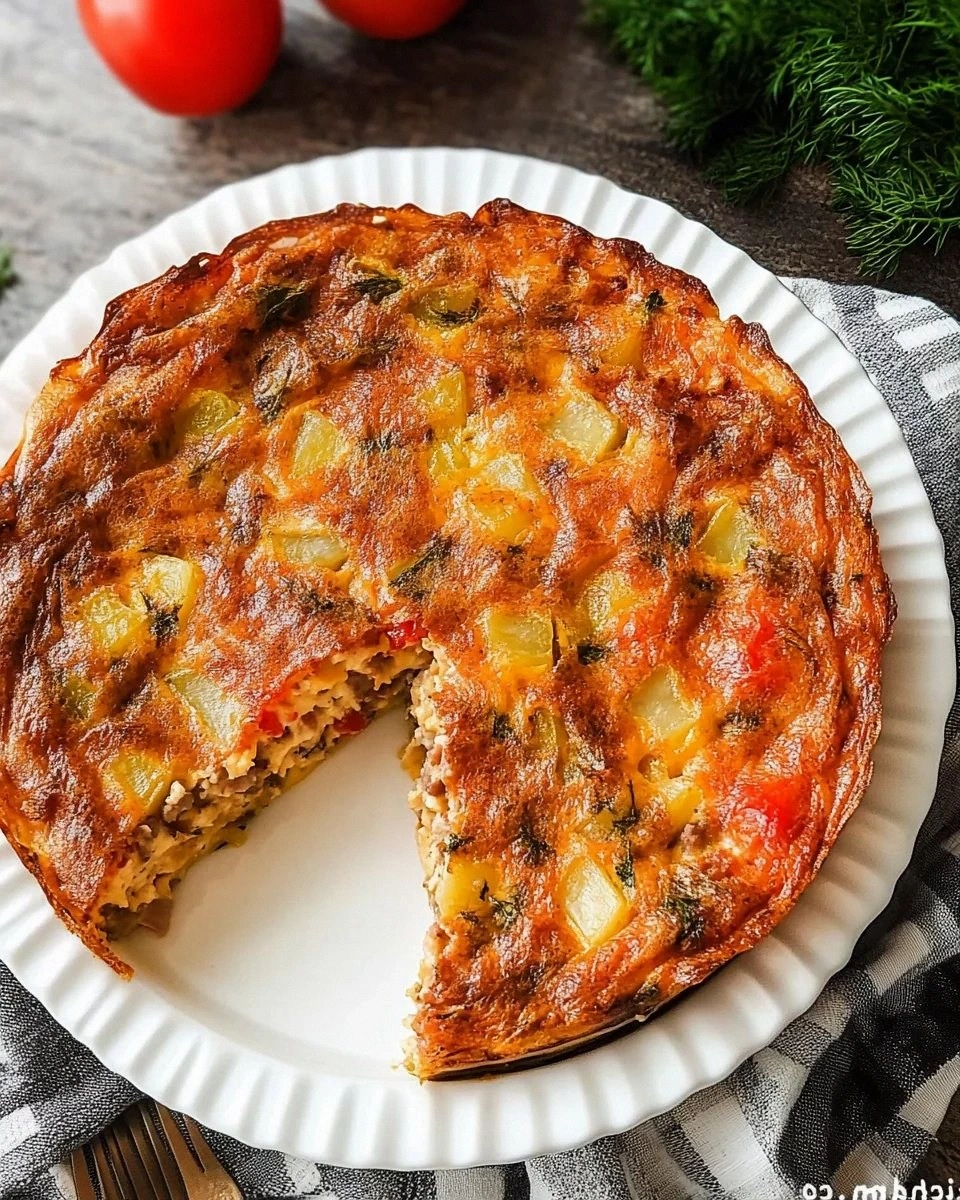
Fast-forward a few dozen experiments, and I can confidently say this sausage potato frittata is the breakfast equivalent of that perfect pair of jeans you can dress up or down and always feel unstoppable in. It’s rustic enough to serve on a paper plate at a tailgate, yet elegant enough to slide onto your best platter for a bridal-shower brunch. The interior is custardy and tender, packed with smoky sausage nuggets and fork-soft potatoes that soak up every drop of seasoned egg. The top bronzes into a cheesy, crackly lid that smells like Sunday morning at the diner you wish existed on your block. The texture contrast alone—creamy middles, crispy edges—will make you close your eyes involuntarily, the way people do when the chorus of their favorite song hits.
But here’s the kicker: it’s a single-skillet wonder. No separate potato pot, no juggling sheet pans, no sink full of dishes before you’ve even had caffeine. You sauté, you pour, you bake, you celebrate. And while most home cooks think frittatas are just “omelets that gave up,” I’m about to show you why this method turns humble ingredients into something worthy of a trattoria menu. We’re talking layers of flavor built in minutes, a texture so light it practically floats off the fork, and a make-ahead superpower that rescues hectic weekdays.
Picture yourself pulling this out of the oven, the whole kitchen smelling incredible, steam curling up like it’s posing for a food-magazine cover shoot. Your roommate wanders in, still in pajamas, eyes wide. Your kid drops the video-game controller. The dog sits at attention like you’ve been hiding bacon in your pocket. You slice it into generous wedges, and suddenly everyone’s civilized, sitting down, actually chewing instead of inhaling. One skillet, zero drama, pure breakfast happiness. Let me walk you through every single step—by the end, you’ll wonder how you ever made it any other way.
What Makes This Version Stand Out
Sausage First: We brown the meat until the edges turn into smoky, caramelized nuggets that taste like campfire bacon. Those browned bits (the fond, if we’re being fancy) season the potatoes that cook in the same fat, so every cube tastes like it’s been vacationing in flavor town.
Double Dairy: A splash of whole milk lightens the texture, but the secret handshake is a spoonful of tangy sour cream folded in off-heat. It adds subtle acidity that makes the eggs taste egg-ier and the cheese taste cheesier without announcing its presence.
Cast-Iron Magic: Starting on the stove and sliding into the oven means the bottom forms a lacy, golden crust while the top stays cloud-soft. Nonstick can’t give you that contrast; only iron can.
Par-Cook Potatoes: Instead of hoping raw cubes magically finish in liquid eggs (they won’t), we give them a quick sauté until just tender. Result: no crunchy spud surprises, just creamy bites that play nicely with custardy eggs.
Smart Seasoning: Eggs are flavor sponges, so we salt the sausage-potato mix while it’s still in the skillet, then finish with a whisper of smoked paprika that blooms in the hot fat. Every forkful tastes intentional, not flat.
Week-Proof: Bake it Sunday night, refrigerate, and you’ve got breakfast for days. A 45-second microwave zap revives the creaminess, or slide a wedge into a toaster oven for that fresh-baked crunch. Meal prep without the sad plastic tub vibe.
Alright, let’s break down exactly what goes into this masterpiece…
Inside the Ingredient List
The Flavor Base
Breakfast sausage is the obvious headliner, but quality matters. Skip the generic tubes that list “spices” as mysterious code for who-knows-what. Look for links with identifiable herbs—sage, thyme, maybe a hint of maple if you like sweet-savory balance. When you slit the casing and crumble it into the pan, the fat renders quickly, self-basting the meat and leaving behind liquid gold that flavors everything else. If you’re feeling rebellious, hot Italian sausage adds a fiery kick that plays beautifully against the mellow potatoes.
Eggs are the velvet canvas. Buy the best you can swing—pasture-raised yolks are sunset-orange and loaded with flavor that factory eggs can’t fake. Room-temperature eggs blend more smoothly with dairy and won’t seize up the minute they hit heat, so pull them out first thing. Whisk until the mixture looks like liquid sunshine; froth is your friend because trapped air lifts the frittata into soufflé territory.
The Texture Crew
Potatoes need to be starchy but not total flakes. Yukon Golds hit that sweet spot: fluffy middles that absorb sausage fat like little edible sponges, yet they hold their shape without turning into mashed blobs. Dice small—half-inch cubes—so they cook through fast and distribute evenly. Leave the skin on for a rustic vibe and extra fiber that makes you feel righteous before noon.
Onion isn’t mandatory, but a thinly sliced half-moon melts into jammy sweetness that bridges savory sausage and creamy eggs. Low and slow is the move; if you rush, the sulfur compounds get angry and you’ll taste bitterness for days. A pinch of salt helps draw out moisture so the edges caramelize like the best diner hash browns.
The Unexpected Star
Sharp white cheddar is my ride-or-die because it melts into silky queso-like pockets but keeps a tangy backbone. Pre-shredded cellulose-coated stuff refuses to melt smoothly, so grab a block and a box grater. Bonus arm workout before coffee. If you want funk, swap in smoked gouda; if you want rich, try gruyere; if you want breakfast that feels like a warm hug, stay with the cheddar.
Fresh herbs wake everything up. Parsley is fine, chives are classic, but dill is the sleeper hit that makes sausage taste brighter. Stir most into the egg mix, then shower the last pinch on top when serving so the color pops against the bronzed surface.
The Final Flourish
A tablespoon of Dijon mustard whisked into the eggs adds subtle depth that no one can identify but everyone raves about. It’s like the bass player in a band—unnoticed when present, sorely missed when absent. If you’re a heat seeker, a few dashes of hot sauce perform the same function while adding zing.
Everything’s prepped? Good. Let’s get into the real action…
The Method — Step by Step
- Preheat your oven to 400°F (205°C). Position a rack in the center so the top browns evenly without overbaking the custard. While the oven works, set your 10-inch cast-iron skillet over medium heat and let it warm for two minutes. A hot pan jump-starts browning and prevents sad, gray sausage. You want that sizzle when it hits the pan? Absolute perfection.
- Slit the sausage casings with a sharp knife and squeeze out the meat. Crumble it into the dry skillet—no oil needed. The fat renders quickly, so let it sit undisturbed for a solid minute. Fight the urge to stir constantly; contact with hot iron builds flavor. When the edges look caramel and the center is no longer pink, break it into pea-size nuggets. Total time: about 5 minutes. Transfer the sausage to a bowl, leaving behind the liquid gold.
- Toss in the diced potatoes in a single layer. Sprinkle with half the salt and all the pepper. The goal here is par-cooking: stir occasionally until the edges turn translucent and you can pierce a cube with a fork but feel the tiniest resistance, 6–7 minutes. If the pan looks dry, drizzle a teaspoon of oil, but usually the sausage fat is enough. Watch closely—potatoes love to stick when you’re not paying attention.
- Add the sliced onion and continue cooking, turning the heat down to medium-low. You want the onions to melt, not char, so patience is currency. When they look like silky ribbons and smell sweet enough to eat straight, you’re there, another 3–4 minutes. Return the sausage to the skillet, stir in the smoked paprika, and remove from heat. Everything should smell like a campfire breakfast in the mountains.
- In a mixing bowl, whisk the eggs, milk, sour cream, Dijon, and remaining salt until the mixture is homogenous and slightly frothy. The froth introduces air, which translates to a lighter bake. Fold in three-quarters of the cheese and half the chopped herbs. Reserve the rest for topping later.
- Spread the sausage-potato mixture evenly in the skillet. The pan is still warm, which jump-starts the bottom crust—exactly what we want. Pour the egg mixture over the top, ensuring it seeps into every crevice. Gently shake the skillet to level things out; the surface should look like a calm custard lake.
- Sprinkle the remaining cheese across the surface. It will melt into a molten blanket that eventually blisters into those Instagram-worthy brown spots. Slide the skillet into the preheated oven and bake for 12 minutes. Resist the urge to open the door; consistent heat is your friend here.
- After 12 minutes, rotate the skillet 180 degrees for even browning. Bake another 5–8 minutes, until the center is just set with a gentle wobble, and the top is mottled gold. A toothpick inserted should come out with only a few moist crumbs. Pull it out and let it rest 5 minutes; the residual heat finishes cooking without turning the eggs rubbery. Garnish with the remaining herbs, slice into wedges, and prepare for silence as everyone takes their first bite.
That’s it—you did it. But hold on, I’ve got a few more tricks that’ll take this to another level…
Insider Tricks for Flawless Results
The Temperature Rule Nobody Follows
Room-temperature eggs and dairy mix seamlessly, preventing cold pockets that cook unevenly. Pull everything out first, then prep your add-ins. Ten minutes on the counter equals zero rubbery curds. A friend tried skipping this step once—let’s just say it didn’t end well, and her dog got more breakfast than she did.
Why Your Nose Knows Best
Trust aroma cues. When the onions begin to smell sweet like French onion soup, they’re ready. When the top of the frittata smells faintly nutty, grab the oven mitts; it’s done. Your nose has been calibrated since childhood—use it. I dare you to taste this and not go back for seconds; your olfactory bulb won’t let you resist.
The 5-Minute Rest That Changes Everything
Resting allows carry-over heat to finish the center without turning the eggs into an eraser. It also firms the wedges so your first cut isn’t a messy avalanche. Cover loosely with foil to keep warm, but not tightly—you’ll steam off that coveted crust.
Creative Twists and Variations
This recipe is a playground. Here are some of my favorite ways to switch things up:
Tex-Mex Sunrise
Swap sausage for fresh chorizo, add a handful of roasted corn, and replace cheddar with pepper jack. Finish with cilantro and a squeeze of lime. Serve with salsa verde for a breakfast that screams “weekend in Austin.”
Greek Isle Escape
Use lamb sausage, fold in chopped spinach and feta, and season with oregano. Top with diced tomatoes and tzatziki on the side. It’s like vacation in wedge form, minus the airfare.
Forest Forage
Skip meat entirely and load the skillet with sautéed mushrooms, thyme, and a whisper of truffle oil. Goat cheese adds tang; a sprinkle of toasted pine nuts gives crunch. Perfect for Meatless Monday bragging rights.
Coastal Catch
Replace sausage with flaked smoked trout and add snippets of fresh dill. Swap cheddar for aged gouda and serve with lemon-dressed arugula. Tastes like a seaside brunch in Maine without the seagulls stealing your food.
Autumn Harvest
Fold in roasted butternut cubes and crispy sage leaves. Use fontina for melty silkiness and a pinch of nutmeg for cozy vibes. It’s October on a plate, even in April.
Spicy Seoul
Mix a teaspoon of gochujang into the eggs, add kimchi instead of onions, and top with sesame seeds and scallions. Cheddar still works—trust the umami bomb fusion. Your taste buds will thank you; your sinuses will clear.
Storing and Bringing It Back to Life
Fridge Storage
Cool the frittata completely, then refrigerate wedges in an airtight container for up to 4 days. Layer parchment between slices to prevent them from glomming together. If you plan to eat it mostly cold, season a tad more aggressively; chilled food dulls flavors.
Freezer Friendly
Wrap individual wedges in plastic wrap, then foil, and freeze up to 2 months. Thaw overnight in the fridge for best texture, though a microwave defrost works in a pinch. Add a tiny splash of water before reheating—it steams back to perfection without rubber edges.
Best Reheating Method
Oven wins: 350°F for 10 minutes on a preheated sheet pan. Skillet runner-up: medium-low with a lid and a teaspoon of water to create a quick steam bath. Microwave is emergency only—cover with a damp paper towel and nuke 45 seconds, let stand 30 seconds, repeat if needed.