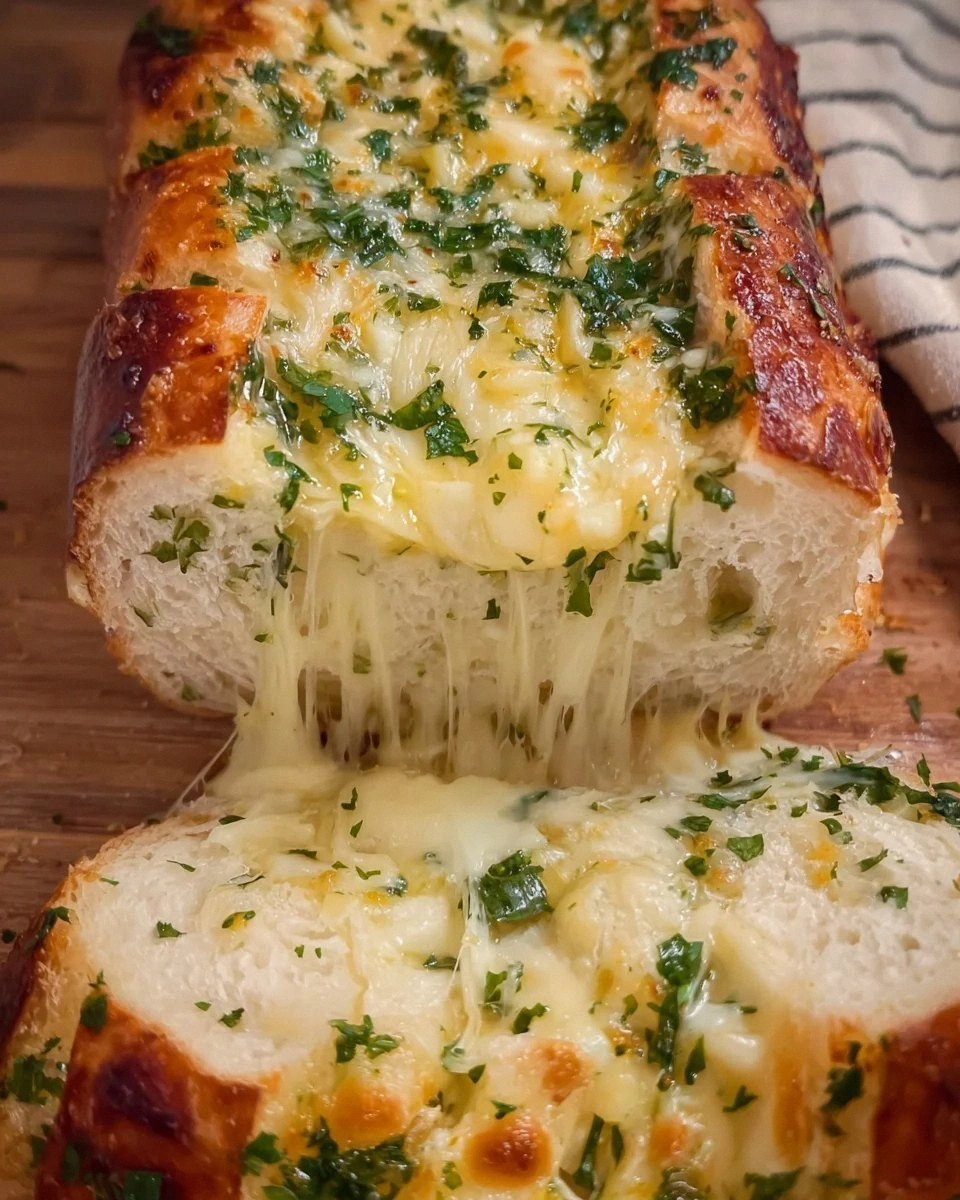
I burned my fingers on a pan of mediocre garlic bread three months ago, and something snapped. Not the bread—my patience. That sad, pale loaf tasted like cardboard dipped in margarine, and I vowed to never again settle for anything less than a masterpiece. What followed was weeks of obsessive testing, loaves upon loaves piling up like edible Jenga blocks, until I finally nailed the version that makes my knees buckle every single time. I’m talking about a glossy, blistered crown that crackles like thin ice under your knuckles, steam that puffs out in fragrant clouds of roasted garlic and nutty cheese, and butter so deeply infused with parsley it looks like a meadow melted. If you’ve ever bitten into something so ridiculously good that you involuntarily close your eyes, you know exactly the feeling I’m chasing—and delivering—here.
Picture this: it’s 9 p.m., the dishes are supposedly done, and the house smells like a Parisian bistro got into a wrestling match with an Italian nonna’s kitchen—parsley, butter, and garlic perfuming every corner. You pull the baking sheet from the oven, the bread audibly sizzling, cheese bubbling like a jacuzzi for your taste buds. A neighbor knocks (true story) asking if you’re running a secret restaurant, because the hallway smells like a five-star crime scene. That sizzle when the butter hits the hot metal? Absolute perfection. I dare you to taste this and not go back for seconds. Actually, I’ll be honest—I ate half the batch before anyone else got to try it, standing over the stove in my slippers, doing that little happy dance we all pretend we don’t do when nobody’s watching.
Most recipes get this completely wrong. They treat garlic bread like an afterthought: grab a baguette, smear on some butter, sprinkle a little garlic powder, bake until vaguely warm. Yawn. What you end up with is hot bread, sure, but zero depth, zero intrigue, zero of that sticky, stretchy cheese pull that Instagram dreams are made of. My version builds flavor like a symphony—every layer has a purpose, every ingredient gets a moment to shine, and every bite leaves you wondering how something so simple can feel so luxurious. Stay with me here—this is worth it. Okay, ready for the game-changer? We’re going to brown the butter first, whip it into airy submission with roasted garlic, then fold in three cheeses that each bring their own personality to the party. The result is a bread that’s crispy, chewy, buttery, nutty, garlicky, and—dare I say—life-changing.
Let me walk you through every single step—by the end, you’ll wonder how you ever made it any other way.
What Makes This Version Stand Out
- Browned-Butter Brilliance: Instead of plain melted butter, we take it to the edge of hazelnut-colored bliss, adding a nutty aroma that makes regular garlic bread taste like a photocopy of a photocopy. The Maillard reaction works its magic, and suddenly your kitchen smells like you’re baking croissants in the French countryside.
- Triple-Cheese Strategy: Mozzarella for the Instagram-worthy stretch, sharp white cheddar for tang, and a whisper of nutty Gruyère because we’re fancy like that. They melt at different rates, creating strata of gooeyness rather than one homogenous blob.
- Roasted-Garlic Sweetness: Raw garlic can be harsh; roasted garlic is mellow, caramel, and spreadable. We roast a whole head, squeeze out the cloves, and whip them into the butter so every crevice carries gentle, almost honey-like garlic notes.
- Parsley Two Ways: Fresh parsley for grassy brightness and parsley stems steeped in the butter for an extra-green, chlorophyll-packed back note. Nothing goes to waste, and the color stays vibrant even after baking.
- Steam-Then-Crisp Technique: We cover the bread for the first half of baking so the cheese melts evenly and the crumb steams, then uncover to let the top blister. No more molten-middle, rock-hard-edge nonsense.
- Make-Ahead Magic: The compound butter keeps for a week in the fridge and months in the freezer. Slice, slather, freeze—future you can have hot bread in ten minutes flat on a random Wednesday, which is basically a superpower.
Alright, let's break down exactly what goes into this masterpiece...
Inside the Ingredient List
The Flavor Base
Roasted garlic is the soul of this bread. Slice the top off a whole head, drizzle with olive oil, wrap in foil, and bake at 400°F for 40 minutes while you binge a sitcom. The cloves emerge sticky and sweet, ready to mash into the butter. Skip this and you’ll get one-dimensional heat instead of mellow depth. If you’re in a pinch, oven-roasted garlic paste from a jar is acceptable; raw garlic or powder is not invited to this party.
Speaking of butter, splurge on the European-style stuff with 82% fat. Higher fat means less water, which translates to richer flavor and better browning. We’re browning eight tablespoons—yes, half a cup—because we’re not here to be subtle. The milk solids will sink and toast, turning amber and aromatic. Strain if you want silky clarity, but I leave them in for extra nutty crunch.
The Texture Crew
For the bread, grab a loaf that’s soft enough to absorb all that butter but sturdy enough to hold a cheese avalanche. A par-baked Italian or French loaf works wonders; sourdough is too chewy and sandwich bread collapses under the weight of our ambitions. Slice it accordion-style, leaving the bottom crust intact so the loaf fans out like a delicious hedgehog. This creates pockets for the butter to pool and the cheese to weave through.
Mozzarella is your melty backbone—use low-moisture, part-skim for maximum stretch without puddles. Cheddar adds sharpness; white cheddar keeps the color palette sophisticated. Gruyère is optional but adds those funky alpine notes that make grown adults close their eyes and sigh. Pre-shredded cheese is coated in cellulose and refuses to melt smoothly, so grate your own and thank yourself later.
The Unexpected Star
Parsley rarely gets the spotlight, but here it’s both understudy and lead actor. Flat-leaf (Italian) parsley has brighter flavor than curly, and the stems carry concentrated chlorophyll. Strip the leaves for finishing, but simmer those stems in the hot butter for five minutes, then discard. The result is a verdant tint and grassy perfume that screams freshness even after a 400°F oven tan.
A pinch of crushed red-pepper flakes wakes everything up without screaming “spicy!” Think of it as the cymbal crash in the symphony—present, but not overpowering. Skip it if you’re feeding tiny humans, but try at least a whisper; you’ll be surprised how it amplifies the cheese.
The Final Flourish
Flaky sea salt scattered on top right before serving gives tiny pops of salinity and crunch. Maldon is the darling, but any coarse salt works. Skip table salt—it dissolves and just makes things saltier rather than more interesting. A quick grate of lemon zest over the hot bread adds a high note that makes the garlic sing and the cheese feel less heavy.
Everything's prepped? Good. Let's get into the real action...
The Method — Step by Step
- Roast your garlic first. Preheat the oven to 400°F, slice the top off a whole head to expose the cloves, drizzle with a teaspoon of olive oil, wrap tightly in foil, and slide it onto the middle rack. Set a timer for 40 minutes and walk away—your house will start to smell like sweet, mellow garlic long before the timer dings. When it’s done, open the foil carefully; steam will whoosh out like a mini sauna. Let it cool until you can handle it, then squeeze the cloves into a small bowl; they’ll slide out like toothpaste from a tube. Mash lightly with a fork; you want a paste, not a puree with soul.
- Brown the butter like a pro. Place a light-colored saucepan over medium heat and add eight tablespoons of cold, cubed butter. Swirl occasionally; it will melt, foam, pop, and then—this next part? Pure magic—the milk solids will drop to the bottom and turn chestnut brown. Once it smells like toasted hazelnuts and you see amber specks, immediately pour it into a heat-proof bowl to stop the cooking. Drop in the parsley stems while it’s hot; they’ll sizzle and infuse. After five minutes, fish them out and discard.
- Whip the compound butter. Add the roasted garlic paste, a pinch of salt, and a few cracks of black pepper to the warm (not screaming hot) butter. Use a hand mixer or a sturdy whisk and beat until the mixture looks like satin—about a minute. The color will be mossy, the aroma will make you swoon, and you’ll be tempted to slather it on toast right then. Resist. You’ve got bigger plans.
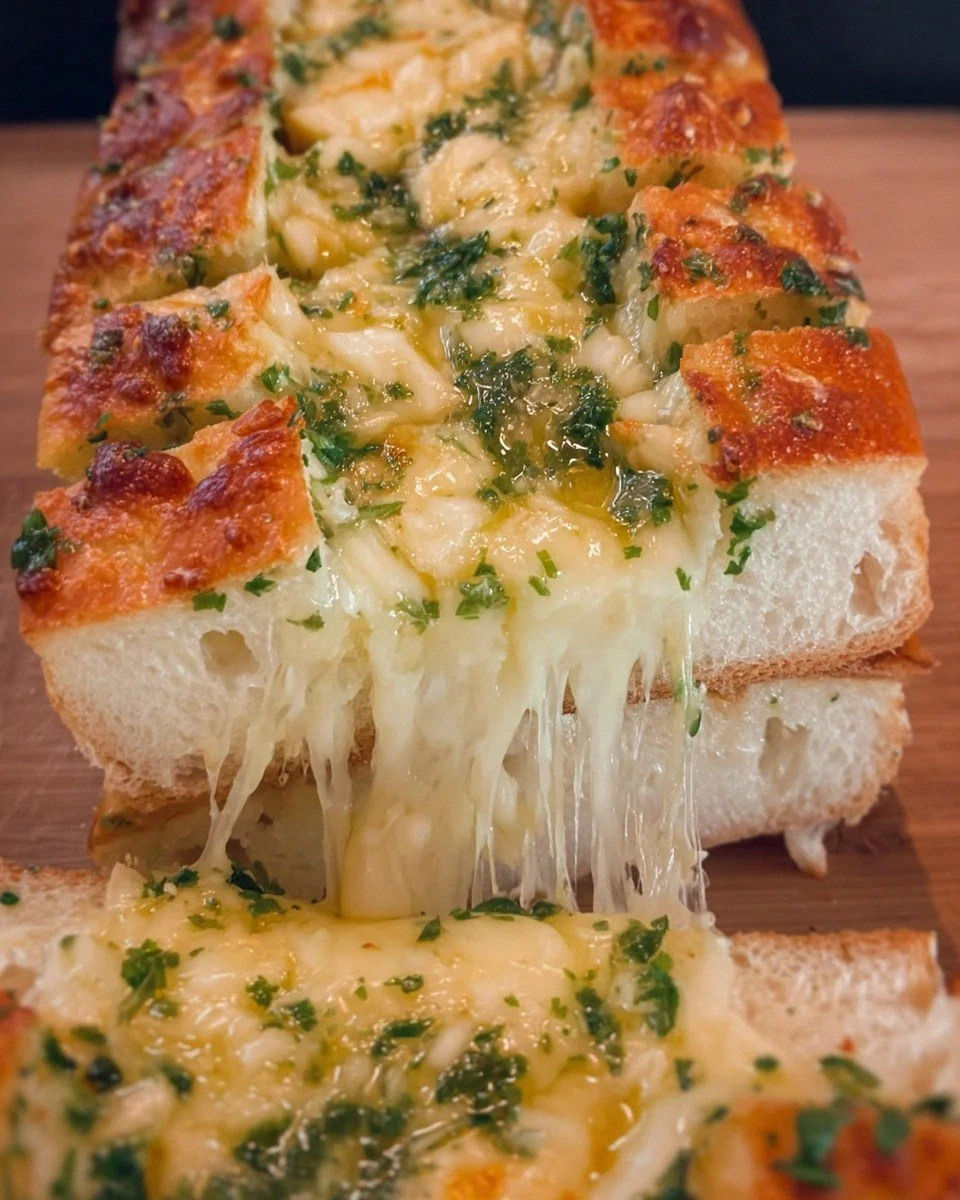
- Prep the loaf. Take your par-baked Italian loaf and, using a serrated knife, slice every inch or so without cutting all the way through. Think accordion or caterpillar—those ridges are about to become cheese highways. Gently pry the cuts open; if the bread is soft, this is easy. If it’s day-old, warm it in the microwave for 15 seconds so it doesn’t tear.
- Schmear with abandon. Using a butter knife or an offset spatula, paint the garlic-parsley butter into every crevice, all the way to the bottom. Be generous; any leftover butter goes on top. The bread should look emerald-marbled and glisten like it’s been swimming in a butter lagoon. Don’t worry about neatness—nobody ever reminisces about tidy garlic bread.
- Pack in the cheese. Mix your grated mozzarella, cheddar, and Gruyère in a bowl. Now tuck handfuls between each slice, pushing down so the cheese nests in the butter. Some will cascade onto the baking sheet; that’s bonus crispy frico later. Save a palmful for sprinkling on top so you get that Instagram-pull.
- Steam first, crisp later. Slide the loaf onto a sheet of foil, bring the edges up to create a loose tent, and pop it into the still-hot 400°F oven for 12 minutes. The enclosed steam melts the cheese evenly and warms the bread through without drying it. Your kitchen will start to smell like a fondue party at a dairy farm—embrace it.
- Uncover and blast. Open the foil, fold it down to expose the top, and bake another 8–10 minutes until the cheese blisters and the edges of the bread turn deep golden. Watch closely; the line between blistered and burnt is about 60 seconds. The sizzle will get louder, the cheese will bronze, and tiny cheese drips will caramelize on the foil like candy.
- Rest like you mean it. Remove the loaf, close the foil loosely, and let it sit five minutes. I know, I know—hot cheese is irresistible—but this rest lets the fats settle so the butter doesn’t run down your chin like a waterfall. Plus, the bread finishes steaming internally, giving you that soft-interior, crispy-exterior contrast.
- Finish and serve. Transfer to a cutting board, sprinkle with flaky sea salt, a shower of fresh parsley leaves, and a whisper of lemon zest if you’re feeling fancy. Serve whole and let everyone tear it apart like medieval royalty. That first pull, when mozzarella stretches a foot before snapping? That’s the moment of truth.
That's it—you did it. But hold on, I've got a few more tricks that'll take this to another level...
Insider Tricks for Flawless Results
The Temperature Rule Nobody Follows
Cheese melts best between 150°F and 170°F, but it doesn’t brown until 200°F. By covering the loaf for the first half, you let the internal temp rise gently so the cheese fully liquefies; then you uncover to hit the higher temperature for color and flavor. A friend tried skipping this step once—let’s just say it didn’t end well. The center was a half-melted cheese plug that slid out like a comedy gag.
Why Your Nose Knows Best
When the aroma shifts from “buttery” to “nutty caramel,” your bread is 90 seconds from perfect. Trust your olfactory system more than the clock; ovens vary, loaves vary, but scent is universal. If you start to smell cheese frico turning into bitter territory, pull it immediately. Future pacing: picture yourself doing this, sniffing like a bloodhound, and feeling like a kitchen wizard.
The 5-Minute Rest That Changes Everything
Resting allows starch retrogradation, a fancy term for the bread re-absorbing some moisture so it doesn’t deflate into a greasy brick. It also lets the cheese proteins relax, so when you tear into it you get silky strands instead of rubber bands. Cover loosely with foil so it stays warm but doesn’t sweat and sog out the crust. Those five minutes are perfect for pouring wine or grabbing more napkins—trust me, you’ll need them.
Creative Twists and Variations
This recipe is a playground. Here are some of my favorite ways to switch things up:
The Truffle Shuffle
Swap Gruyère for fontina and add a whisper of white-truffle oil to the butter. Keep it under half a teaspoon; truffle is a diva that loves to steal the show. Finish with a snowfall of parmesan and black pepper. Dinner-party guests will assume you hired a caterer.
Buffalo Blue Blast
Fold a tablespoon of Buffalo hot sauce into the butter and substitute crumbled blue cheese for the cheddar. After baking, drizzle more Buffalo sauce in thin, artsy squiggles. Serve alongside celery sticks so you can pretend it’s salad.
Pizza Bread Remix
Add a spoon of sun-dried-tomato paste and a pinch of oregano to the butter, then tuck in tiny cubes of pepperoni and shredded provolone. When it emerges from the oven, shower with grated parm and torn basil. It’s like a calzone and garlic bread had a beautiful, carb-y baby.
Everything Bagel Edition
Mix two teaspoons of Everything seasoning into the butter and use cream cheese cubes in addition to mozzarella. After the final crisp, brush with a light coat of honey-butter for that sweet-savory bagel vibe. Sprinkle extra seasoning on top so it adheres while the cheese is molten.
Sweet Heat Surprise
Add a tablespoon of honey and a pinch of cayenne to the butter for a sweet-spicy kick. Use sharp cheddar and a scattering of pickled jalapeños between the slices. The contrast of honeyed heat and salty cheese is addictive; I once made two loaves and had to hide the second one from myself.
Herb Garden Overload
Swap parsley for a 50/50 mix of basil and tarragon, and add a teaspoon of lemon zest to the butter. The anise note from tarragon makes the garlic taste sweeter, and basil perfumes the kitchen like summertime. Perfect with grilled fish or a tomato salad.
Storing and Bringing It Back to Life
Fridge Storage
Wrap any leftover slices tightly in foil and refrigerate for up to four days. The cold congeals the butter, so when you reheat you get that just-baked drip without sogginess. Store cheese-side-up so the crust doesn’t absorb condensation and turn rubbery. If you know you’ll have leftovers, under-bake by two minutes so the reheat doesn’t push the cheese into bitter territory.
Freezer Friendly
Flash-freeze individual slices on a sheet pan until solid, then transfer to a zip-top bag with parchment between layers. They’ll keep for two months without frostbite. Bake from frozen at 375°F for 12–15 minutes, tenting with foil for the first half. Add a tiny splash of water on the sheet before covering; the steam reinvigorates the crumb like a bread spa day.
Best Reheating Method
Skip the microwave unless you enjoy rubber cheese. Instead, warm a skillet over medium, add a slice cheese-side-down for 90 seconds to re-crisp, then flip and cover for another minute. The direct heat revives the crust while the trapped steam re-melts the cheese. If you’re reheating a whole loaf, wrap in foil and warm at 350°F for 10 minutes, then uncover for 3 to bring back the crunch.