Love this? Pin it for later! 📌
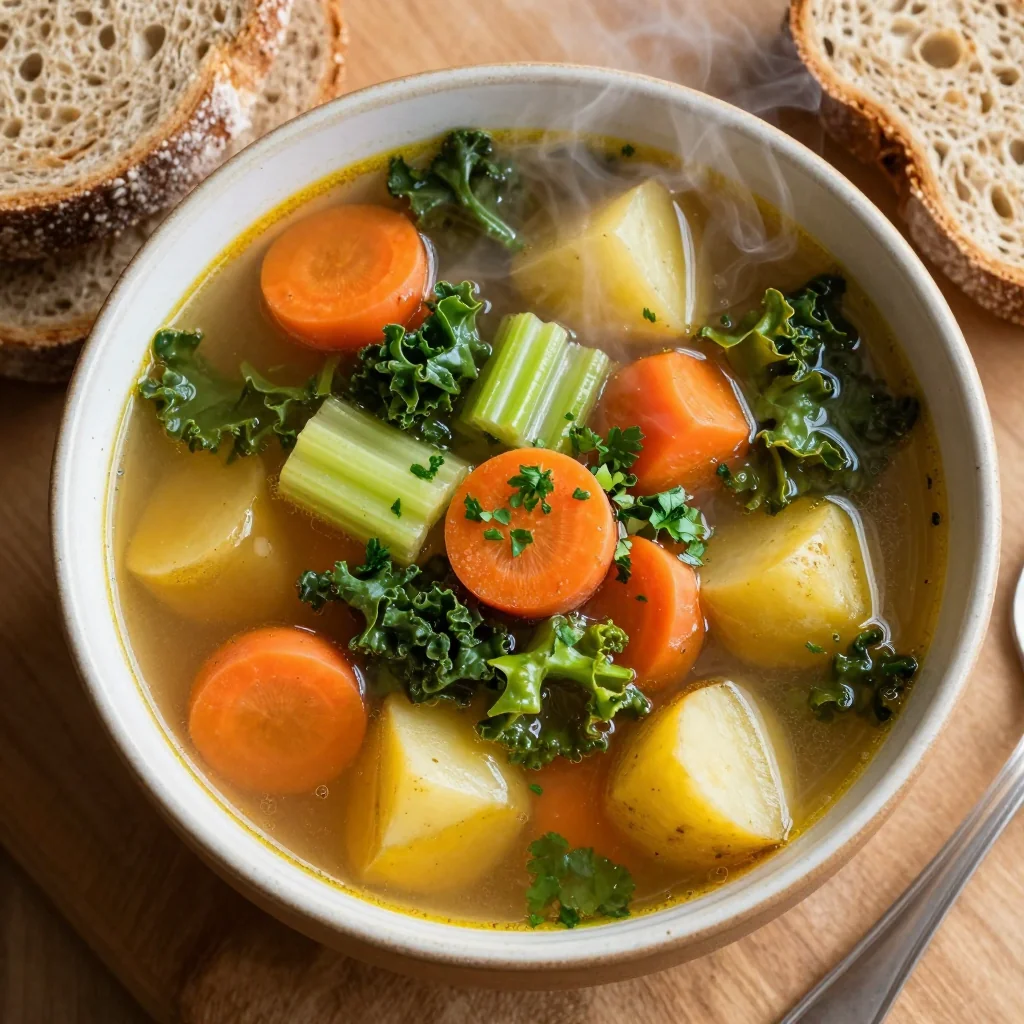
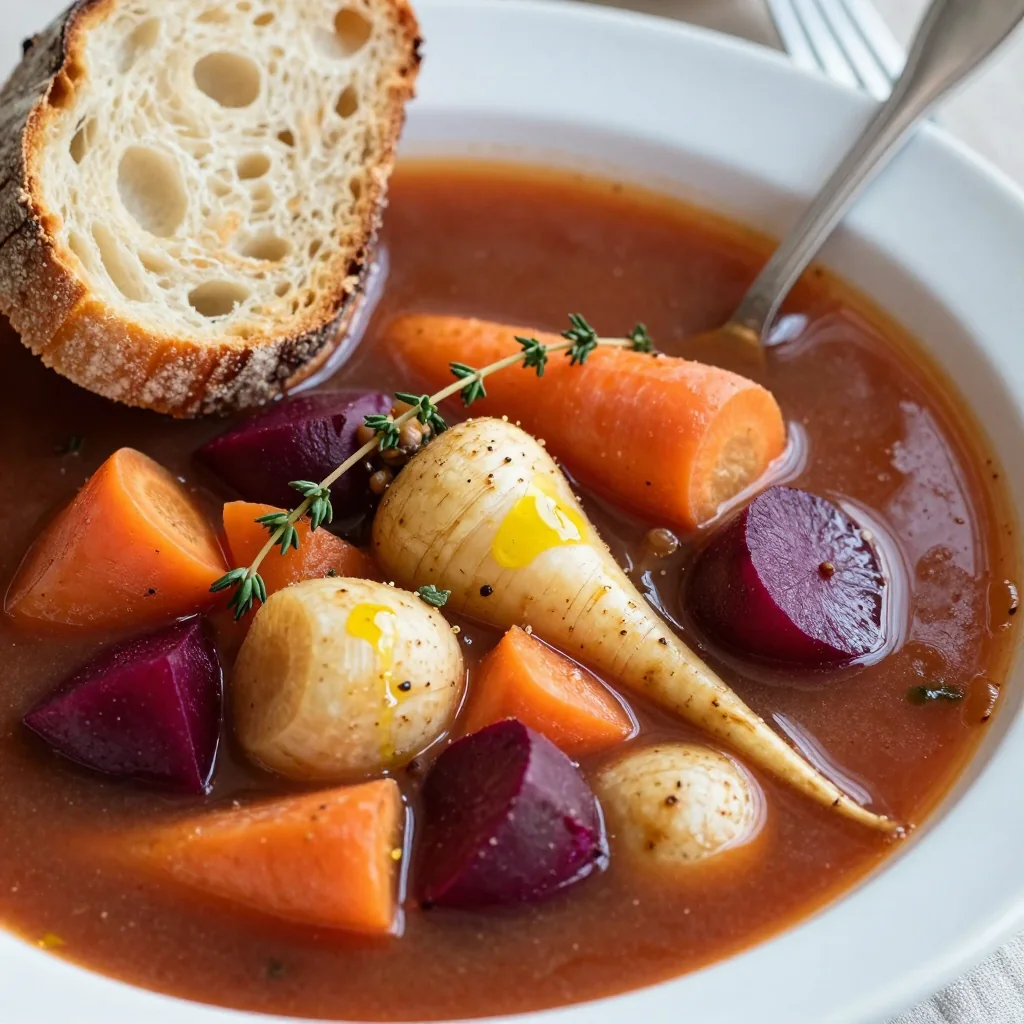
Over the past decade, I've refined this recipe into the ultimate winter comfort food. It's the dish I crave when the wind howls outside, when the holidays have left me exhausted, or when I simply need to feel grounded and nourished. The beauty lies in its simplicity: earthy vegetables slowly simmered in a rich, herb-infused broth until everything melts together into something far greater than the sum of its parts. This isn't just dinner—it's a warm hug in a bowl, a rebellion against winter's harshness, and proof that the most humble ingredients can create the most memorable meals.
Why This Recipe Works
- Layered Flavor Development: We build complexity by caramelizing vegetables in stages, creating a depth of flavor that tastes like it's been simmering for days.
- Nutrient-Dense Ingredients: Each vegetable brings unique vitamins and minerals, making this stew a powerhouse of winter nutrition that actually fights seasonal blues.
- Perfect Texture Balance: A combination of diced and pureed vegetables creates a stew that's both hearty and luxuriously creamy without any dairy.
- Flexible Cooking Methods: Works beautifully on stovetop, in a slow cooker, or pressure cooker, adapting to whatever your schedule demands.
- Make-Ahead Magic: Flavors intensify overnight, making this the ultimate meal prep solution that gets better with time.
- Budget-Friendly Luxury: Uses inexpensive winter vegetables to create a restaurant-quality meal for less than $2 per serving.
Ingredients You'll Need
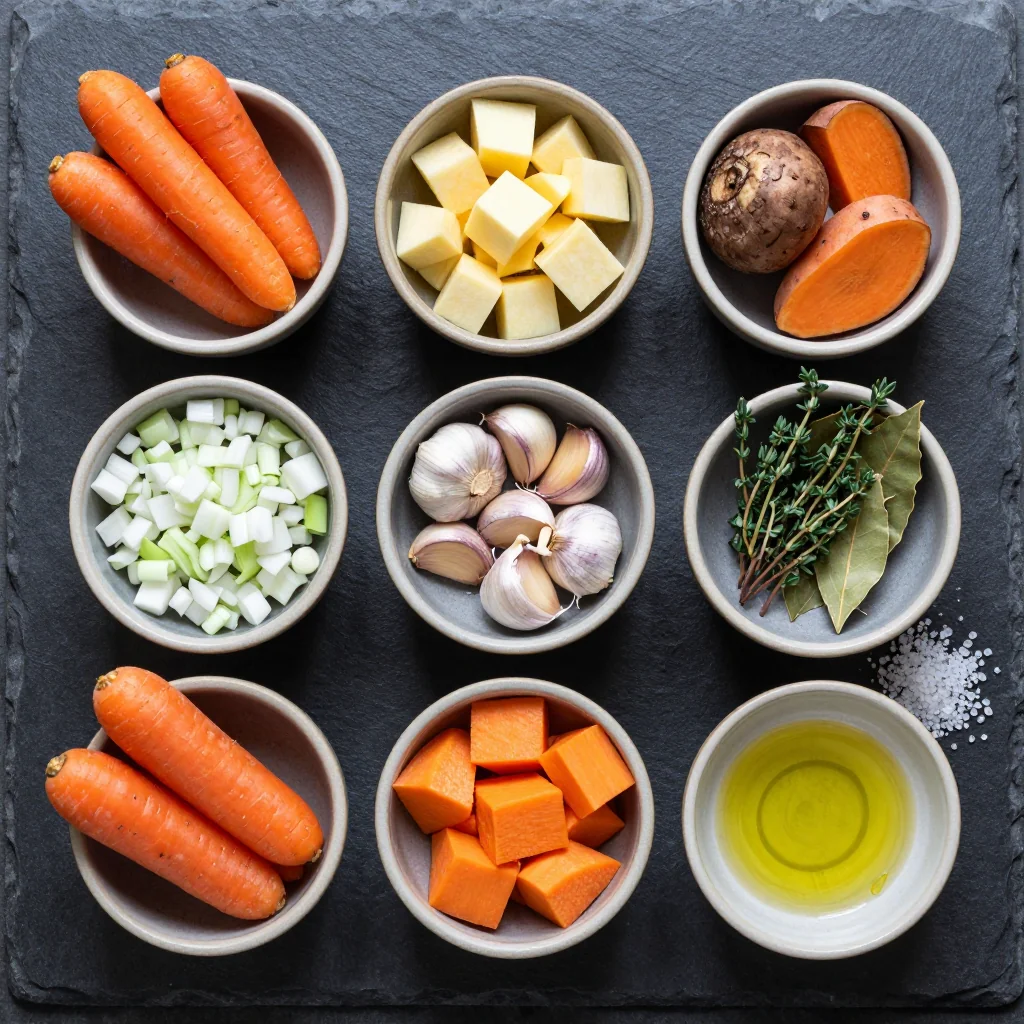
Every ingredient in this stew has been carefully selected to create the most comforting, flavorful experience possible. The combination of root vegetables provides natural sweetness, while the herbs and aromatics build layers of savory complexity that make this stew absolutely irresistible.
Root Vegetables: The stars of this show include parsnips, which become candy-sweet when roasted, and rutabaga, whose subtle bitterness balances the sweetness. Choose parsnips that are firm and pale, avoiding any with dark spots or spongy areas. Rutabaga should feel heavy for its size with smooth, unblemished skin. Don't skip the celeriac (celery root)—its delicate celery flavor adds an elegant note that elevates the entire dish.
Alliums: Leeks provide a milder, more sophisticated flavor than onions, becoming silky and meltingly tender. Look for leeks with bright green tops and firm white bases. Shallots add depth with their subtle garlic notes. When selecting, choose shallots that feel heavy and have dry, papery skins.
Herbs & Aromatics: Fresh thyme is essential—its earthy, slightly floral flavor defines winter cooking. Bay leaves add complexity, while whole peppercorns infuse gentle heat. Store fresh herbs wrapped in damp paper towels in your vegetable crisper for up to two weeks.
Broth Base: Use the best quality vegetable broth you can find, or better yet, make your own. The broth is the foundation of flavor here, so quality matters immensely. For an extra-rich stew, substitute half the broth with mushroom broth for umami depth.
The Secret Ingredients: A tablespoon of miso paste adds incredible umami depth, while a splash of apple cider vinegar brightens all the flavors. Don't be tempted to skip these—they're what separate a good stew from an unforgettable one.
How to Make Winter Root Vegetable Stew for Cozy Nights In
Prep and Clean Your Vegetables
Begin by thoroughly washing all root vegetables under cold running water, using a vegetable brush to remove any soil. Peel the celeriac with a sharp knife, removing all the knobby exterior. Cut into 1-inch pieces and immediately place in a bowl of cold water with lemon juice to prevent browning. Peel the rutabaga and parsnips, cutting them into uniform ¾-inch pieces for even cooking. The key here is consistency—vegetables cut to the same size will cook at the same rate.
Prepare the Aromatics
Clean the leeks thoroughly by slicing them lengthwise and rinsing between each layer—leeks trap sandy soil that will ruin your stew. Slice into ½-inch half-moons. Mince the shallots and garlic, letting them sit for 10 minutes after chopping to develop their protective compounds. This step activates the allicin in garlic, making it more beneficial for your immune system—a welcome bonus during cold and flu season.
Build the Flavor Base
Heat 3 tablespoons of olive oil in a heavy-bottomed Dutch oven over medium heat until shimmering. Add the leeks and shallots with a pinch of salt, cooking slowly for 8-10 minutes until they begin to caramelize. This patient approach develops the sweet, complex flavors that form the backbone of your stew. Stir occasionally, adjusting heat to prevent burning while encouraging golden edges.
Deglaze and Season
Add the minced garlic, thyme, and bay leaves, cooking for 1-2 minutes until fragrant. Pour in ½ cup of white wine or vermouth, scraping the bottom of the pot with a wooden spoon to release all the caramelized bits. These fond bits (the technical term for those browned bits) contain concentrated flavor that will enrich your entire stew.
Add the Root Vegetables
Drain the celeriac and add it along with the parsnips and rutabaga to the pot. Toss everything together, coating the vegetables with the aromatic oil. Cook for 5-7 minutes, stirring occasionally, until the vegetables begin to brown slightly at the edges. This step concentrates their flavors through the Maillard reaction, creating hundreds of new flavor compounds.
Simmer to Perfection
Add the vegetable broth, miso paste, and whole peppercorns. Bring to a gentle simmer, then reduce heat to low. Cover partially and cook for 45-50 minutes, until the vegetables are fork-tender. The key is maintaining a gentle simmer—too vigorous and the vegetables will break apart; too gentle and they won't cook properly.
Create Texture Contrast
Using a slotted spoon, remove 2 cups of cooked vegetables and place them in a blender with 1 cup of the cooking liquid. Blend until completely smooth, then stir this puree back into the stew. This technique creates a luxurious, creamy texture without adding any dairy, while still maintaining chunks of vegetables for satisfying texture.
Final Seasoning and Serve
Stir in the apple cider vinegar and taste for seasoning. Add salt and freshly ground black pepper as needed. Let the stew rest for 10 minutes off heat—this allows the flavors to meld and the texture to set properly. Serve hot, garnished with fresh parsley or chives and a drizzle of good olive oil. Accompany with crusty bread for sopping up every last drop.
Expert Tips
Time Your Vegetable Addition
Add vegetables in stages based on their cooking times. Start with celeriac and rutabaga, as they need the longest cooking time. Add parsnips after 15 minutes, and any quicker-cooking vegetables in the final 20 minutes for perfect texture.
Control Your Heat
Maintain a gentle simmer throughout cooking. Violent boiling will break down vegetables into mush, while too-low heat won't properly develop flavors. The ideal temperature is just below boiling, with occasional gentle bubbling.
Bloom Your Spices
Toast dried spices in the oil for 30-60 seconds before adding liquids. This releases their essential oils and intensifies flavors. Be careful not to burn them—stir constantly and remove from heat if they start to smell acrid.
Save Your Vegetable Water
If you boil vegetables for other meals, save the nutrient-rich cooking water. It adds extra flavor and nutrition to your stew base. Just ensure it's unsalted and from mild-flavored vegetables like potatoes or carrots.
Winter Herb Preservation
Keep fresh herbs longer by treating them like flowers. Snip the ends and place in a jar with water, covering loosely with a plastic bag. Change the water every few days. Alternatively, chop and freeze in ice cube trays with olive oil.
Adjust Consistency
For a thicker stew, mash some vegetables against the pot's side with a potato masher. For thinner consistency, add more broth. The stew will thicken significantly as it cools, so adjust accordingly when reheating.
Variations to Try
Moroccan-Inspired Version
Add 2 teaspoons each of ground cumin and coriander, 1 teaspoon cinnamon, and ½ teaspoon saffron. Include chickpeas and finish with chopped preserved lemon and fresh cilantro. Serve over couscous for a warming North African feast.
Pro tip: Add a pinch of cayenne for gentle heat that warms you from the inside out.
Forest Mushroom Medley
Substitute half the root vegetables with a mix of wild mushrooms like cremini, shiitake, and oyster. Use mushroom broth instead of vegetable broth and add a splash of dry sherry. Finish with fresh thyme and truffle oil for an elegant touch.
Summer Garden Edition
Swap root vegetables for summer produce like zucchini, yellow squash, tomatoes, and bell peppers. Add fresh basil and oregano, and finish with a drizzle of pesto. This lighter version is perfect for warmer months.
Protein-Packed Power Stew
Add French green lentils or white beans during the last 30 minutes of cooking. Stir in baby spinach at the end for extra nutrients. This version provides complete proteins and makes the stew a one-pot meal.
Storage Tips
This stew is a meal prep dream, improving in flavor over time as the ingredients meld together. Understanding proper storage techniques ensures you'll have delicious, safe meals ready whenever winter hunger strikes.
Refrigeration Guidelines
Cool the stew completely within 2 hours of cooking to prevent bacterial growth. Transfer to shallow containers for rapid cooling—deep pots retain heat too long. Properly stored, the stew keeps for 4-5 days in the refrigerator. For best results, store the stew without the garnish and add fresh herbs when reheating.
Freezing Instructions
This stew freezes beautifully for up to 3 months. Portion into freezer-safe containers, leaving 1-inch headspace for expansion. Label with the date and contents. For best texture, slightly undercook vegetables if you plan to freeze, as they'll soften further during reheating.
Pro tip: Freeze in silicone muffin trays for individual portions, then transfer to freezer bags. You'll have perfect single-serving portions ready in minutes.
Reheating Methods
For stovetop reheating, place stew in a saucepan with a splash of broth or water. Heat over medium-low, stirring occasionally, until piping hot. For microwave reheating, use 50% power in 2-minute intervals, stirring between each interval.
Avoid reheating more than once, as this compromises both safety and quality. If you've frozen the stew, thaw overnight in the refrigerator before reheating.
Frequently Asked Questions
Absolutely! This stew adapts beautifully to slow cooking. Sauté the aromatics on the stovetop first for best flavor development, then transfer everything to your slow cooker. Cook on LOW for 6-7 hours or HIGH for 3-4 hours. Add quick-cooking vegetables like peas or spinach during the last 30 minutes. The slow cooker version is perfect for busy weekdays.
Celeriac can be challenging to find, but several substitutes work beautifully. Use celery stalks with leaves for similar flavor, though the texture will be different. Fennel bulb provides a lovely anise note that complements root vegetables. In a pinch, add ½ teaspoon celery seed with the other aromatics. Each option creates a unique but delicious variation.
Yes, this recipe is naturally vegan and gluten-free as written. The miso paste adds umami depth without animal products. If you have celiac disease, ensure your miso is certified gluten-free, as some varieties contain barley. The stew gains its rich, satisfying texture from pureed vegetables rather than flour or cream, making it suitable for various dietary needs.
Several methods work without compromising flavor. Remove 1-2 cups of vegetables and broth, blend until smooth, then return to the pot. Alternatively, mash some vegetables directly in the pot with a potato masher. For immediate thickening, mix 1 tablespoon cornstarch with cold water and stir in, simmering for 2-3 minutes.
Prevention tip: The stew thickens as it cools, so avoid over-thickening while hot.
Wine adds wonderful depth to this stew. Use a dry white wine like Sauvignon Blanc or Pinot Grigio, adding it after the aromatics have cooked. Let it simmer for 2-3 minutes to cook off the alcohol before adding other liquids. For a richer version, substitute red wine and add with the broth. The alcohol cooks away, leaving complex flavor behind.
The stew pairs beautifully with hearty, rustic breads that can stand up to its robust flavors. Try a crusty sourdough, seed-filled whole grain, or traditional Irish soda bread. For special occasions, serve with warm cornbread or rosemary focaccia.
Gluten-free option: Serve over creamy polenta or alongside gluten-free cornbread for a complete meal.
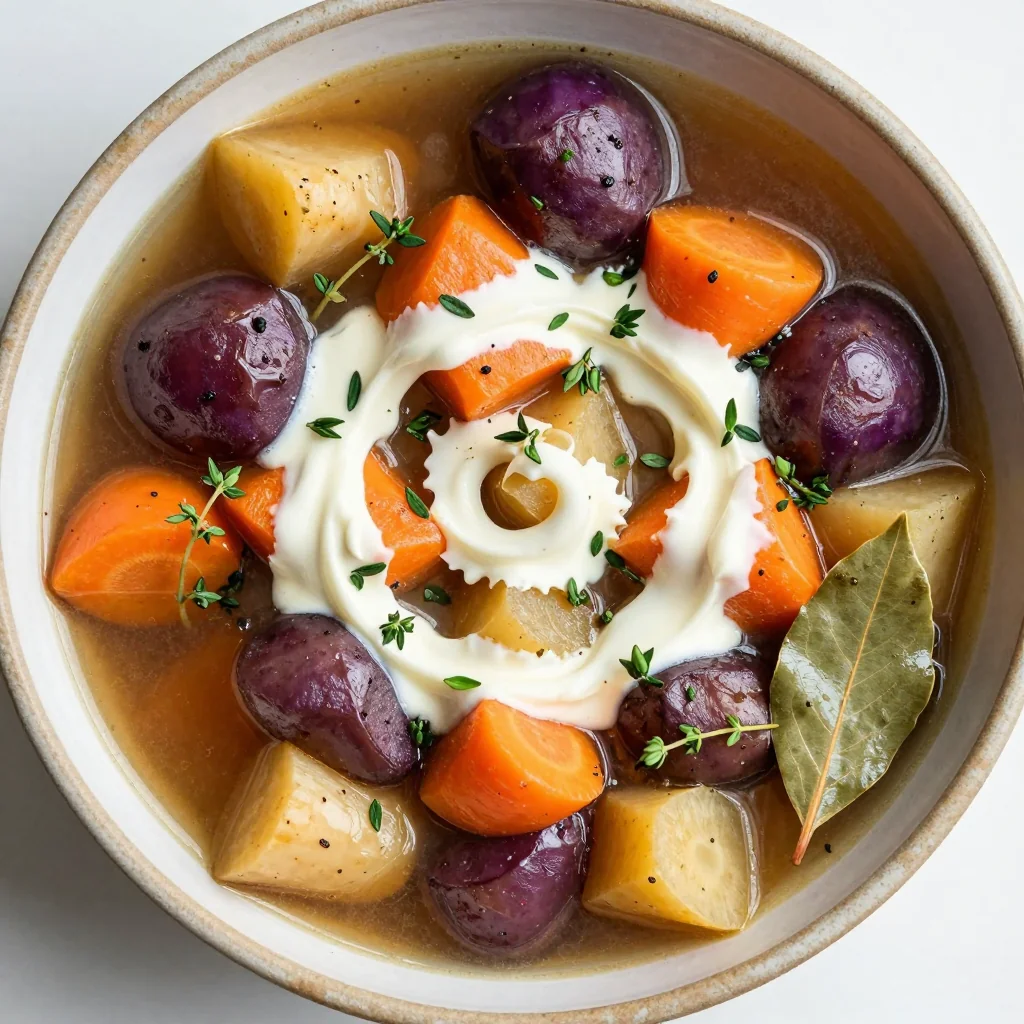
Winter Root Vegetable Stew for Cozy Nights In
Ingredients
Instructions
- Prep vegetables: Clean and cube all root vegetables, keeping them in cold water with lemon juice to prevent browning.
- Sauté aromatics: Heat olive oil in Dutch oven, cook leeks and shallots until caramelized, about 10 minutes.
- Add flavor base: Stir in garlic, thyme, and bay leaves, cooking until fragrant, about 2 minutes.
- Add vegetables: Drain celeriac and add with parsnips, rutabaga, and potatoes. Toss to coat with oil.
- Simmer: Add broth, miso paste, and peppercorns. Simmer gently for 45-50 minutes until vegetables are tender.
- Blend portion: Remove 2 cups vegetables and broth, blend until smooth, and return to pot for creamy texture.
- Season and serve: Stir in vinegar, adjust seasoning, and garnish with fresh parsley.
Recipe Notes
For best flavor, make this stew a day ahead. The vegetables will continue to absorb the aromatic broth, creating an even more delicious meal. Store in the refrigerator for up to 5 days or freeze for up to 3 months.