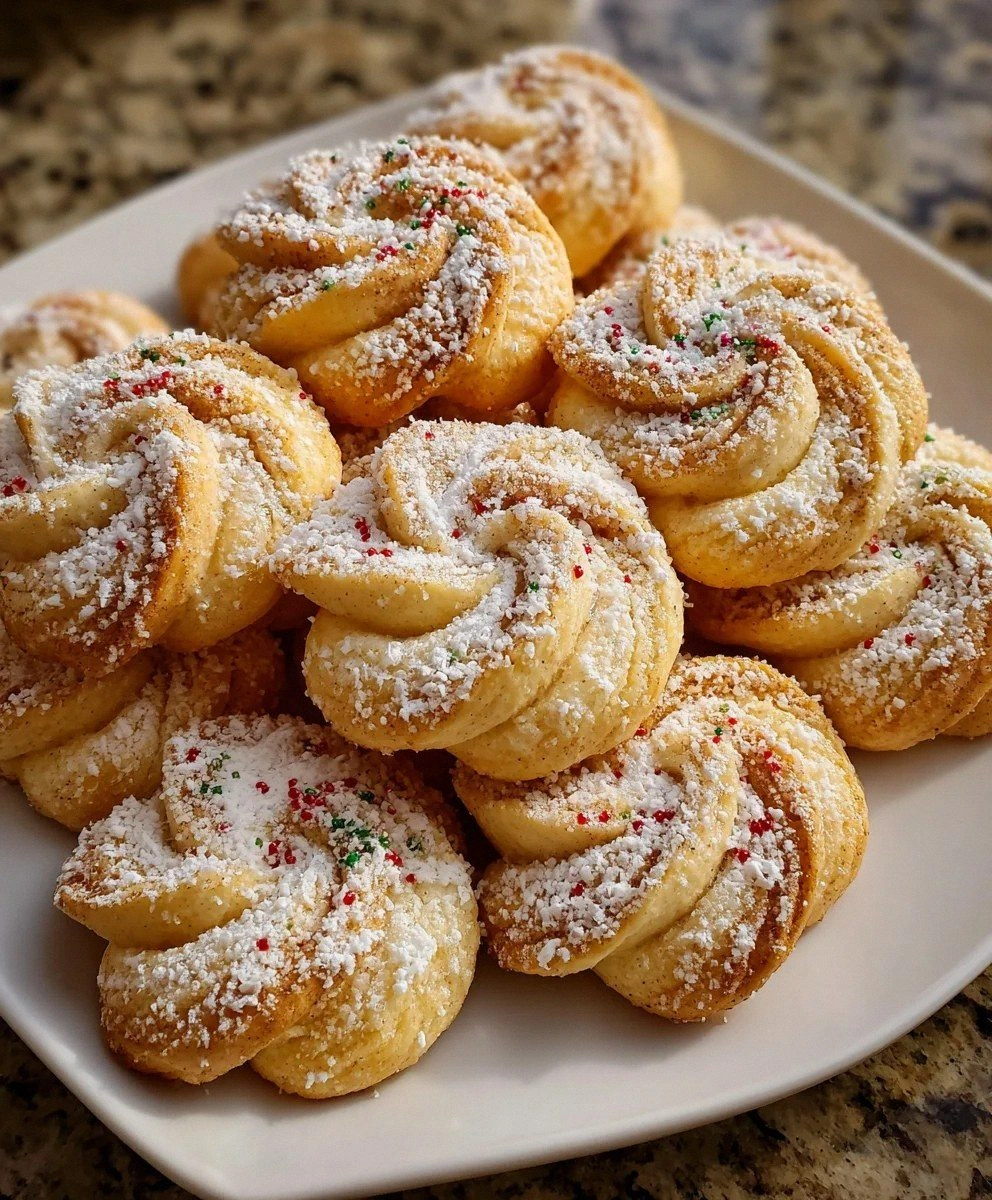
Last December I set out to make the most Instagram-worthy Christmas cookies ever. You know the type — perfectly symmetrical stars, pristine snowflakes, maybe a jaunty little gingerbread man with icing suspenders. By hour three I had a kitchen that looked like a blizzard collided with a flour truck, cookies that resembled abstract art more than anything edible, and a twitch in my right eye that wouldn’t quit. The royal icing seized, the sprinkles bled into each other, and somehow the cat walked through the dough and left neon-green paw prints on the hardwood. I was ready to swear off holiday baking forever when my neighbor barged in, took one look at the chaos, and said, “Why don’t you just twist them instead of cutting them?” I almost laughed her out the door, but desperation makes you do wild things. Twenty minutes later I was rolling ropes of dough, twisting them like soft pretzels, and plopping them on the sheet with reckless abandon. No cookie cutters, no icing bags, no existential dread. The smell that drifted from the oven was Christmas past, present, and future wrapped in buttery anticipation. When they cooled, I took a bite and the snap was so clean it sounded like December itself cracking open. Spices bloomed on my tongue—cinnamon first, then nutmeg, then a whisper of orange that arrived fashionably late. I ate five standing up, wearing flour-dusted pajamas, while the cat glared at me from the windowsill. That happy accident became my signature Twisted Christmas Cookies, and they’ve ruined me for any other holiday treat. If you’ve ever fought with royal icing or cried over broken gingerbread limbs, come sit by my counter. We’re about to make the most forgiving, most impressive, most ridiculously delicious Christmas cookies you’ve ever pulled from an oven.
Picture this: it’s December 23, the mall is a war zone, the grocery store is out of powdered sugar, and you promised your kid’s classroom homemade cookies by tomorrow morning. Traditional cut-outs are laughing at you from behind their Pinterest-perfect facades. Enter the twist—literally. These cookies look like you hired a pastry brigade, but they’re just store-cupboard staples rolled into spirals that bake into dramatic golden corkscrews. The ridges catch powdered sugar like Alpine peaks, the crannies hold little pools of vanilla, and every bite delivers that shortbread-meets-gingerbread magic that makes people close their eyes involuntarily. I dare you to taste one and not go back for seconds; I’ve seen stoic uncles and keto-obsessed cousins break that resolve in record time. The dough comes together in one bowl, chills while you wrap presents, and bakes in the time it takes to belt Mariah Carey’s greatest hit twice. You’ll roll, twist, and bake your way to a platter that looks like edible art but secretly required zero artistry. Future pacing moment: imagine walking into the party, cookie tin in hand, and hearing someone gasp, “Wait, you MADE these?” Yes, friend, you did—and you’ll barely break a sweat.
Okay, ready for the game-changer? We’re swapping the usual cream-cheese dough for a hybrid that behaves like clay in your hands but tastes like holiday luxury on your tongue. Butter for richness, brown sugar for caramel notes, a whisper of honey so the twists open slightly in the oven and reveal those gorgeous laminated layers. Most recipes get this completely wrong by overloading with leavening; we use just enough baking powder to keep things tender without puffing away the detail. And the spice blend? We bloom it in melted butter first so the oils wake up and perfume your kitchen like a candle named “Grandma’s House, But Make It Fashion.” Stay with me here—this is worth it. Let me walk you through every single step—by the end, you’ll wonder how you ever made it any other way.
What Makes This Version Stand Out
- Texture: Shatter-crisp edges that give way to a tender, almost shortbread center—no doughy disappointment, no tooth-breaking bricks.
- Visual Wow: The twisted ropes look like something from a Parisian window display, yet they’re easier than tying shoelaces.
- One-Bowl Dough: Everything mixes in ten minutes flat; you don’t even need a mixer unless your wrist is on vacation.
- Spice Balance: Cinnamon leads, cardamom waltzes in for depth, and a kiss of black pepper adds mystery—people taste it but can’t name it.
- Make-Ahead Magic: Freeze the shaped twists on a sheet, then bag them. Bake straight from frozen when surprise guests show up.
- Kid-Friendly Assembly: Little hands love rolling “snakes” and twisting; no sharp cutters or runaway rolling pins required.
- Flavor Flexibility: Swap citrus zest, cocoa powder, or espresso for completely new personalities using the same method.
Inside the Ingredient List
The Flavor Base
Butter is the star here, and I’m unapologetically demanding that you use the European-style stuff with 82% fat. Lower moisture means crisper cookies and a richness that tastes like you hired a French baker at dawn. Brown sugar adds molasses depth, but we split it: two-thirds light for sweetness, one-third dark for smoky undertones. A tablespoon of honey isn’t just for flavor; it acts like edible glue, helping the twists hold their shape and develop micro-caramel cracks. If you skip the honey, you’ll get tasty ropes but they’ll flake apart like old pottery. And please, grate your own spices—pre-ground nutmeg tastes like pencil shavings in comparison.
The Texture Crew
All-purpose flour gives structure, but we yank away some of it and replace that volume with cornstarch, the clandestine tenderizer. Cornstarch shortens gluten strands so every bite dissolves instead of turning rubbery the next day. Baking powder is minimal—just ¼ teaspoon—because we want crunch, not puff. A single egg yolk adds fat and lecithin for cohesion, but we leave the white out; it would steam and soften the final result. Salt is non-negotiable; it sharpens every other flavor like adjusting the focus on binoculars. And now the fun part: a tablespoon of orange zest. The oils contain terpenes that boost sweetness perception, meaning you can use less sugar and still feel like you’re living indulgently.
The Unexpected Star
Black pepper in cookies? Stay with me here—this is worth it. A mere ⅛ teaspoon wakes up your palate so the spices read brighter, kind of like turning on the lights in a dim room. If you skip it, the cookies still taste good, but they lack that intriguing “why can’t I stop eating these” quality. Another sleeper ingredient is a few drops of almond extract; it plays sidekick to the butter, suggesting marzipan without clubbing you over the head. If nut allergies are a concern, swap in a whisper of maple extract or skip entirely—no harm done.
The Final Flourish
Once baked, we shower the twists with vanilla bean powdered sugar. Blitz a cup of sugar with the scraped seeds of half a bean; the aroma will make you want to roll around in it like a cat in catnip. You could use store-bought vanilla sugar, but you’d miss the tiny black freckles that signal homemade luxury. For a glam rock version, whisk a touch of edible gold luster dust into the sugar; it catches the light like frost on pine needles. And if you’re feeling rebellious, swap half the vanilla sugar for citrus zest sugar—lemon for brightness, lime for a margarita vibe, grapefruit for sophisticated bitterness.
The Method — Step by Step
- Melt six tablespoons of butter in a small skillet until it foams, then drop in your cinnamon, cardamom, nutmeg, and black pepper. Swirl the pan off heat for 45 seconds; the spices will bloom and smell like Santa’s cologne. Pour this fragrant lava into your mixing bowl immediately so it doesn’t carryover-cook. This extra step sounds fussy, but it’s the difference between flat spices and ones that sing barbershop harmonies.
- Add the remaining cold butter to the bowl in marble-sized chunks. The hot spiced butter will partially melt the cold butter, creating a marbled mixture that creams faster and traps air like tiny balloons. Beat in both sugars and the honey until the combo looks like wet sand at low tide. Crack in the egg yolk and almond extract, then let the mixer run until the bowl feels cool again—about two minutes. You’re re-solidifying the fat so the dough isn’t greasy when you roll it.
- Whisk flour, cornstarch, salt, and baking powder in a separate bowl. Sprinkle this into the butter mixture in three additions, folding like you’re making biscuits. The moment the flour disappears, stop; over-mixing is the Grinch that steals tenderness. The dough will feel like Play-Dugh that’s been left out for an hour—pliable but not sticky. If it’s tacky, dust your fingers with cornstarch, not flour, to avoid toughening it.
- Scrape the dough onto a sheet of parchment, press into a rectangle, and top with another parchment sheet. Roll it ¼-inch thick; the top sheet prevents cracks and means zero extra flour. Slide the slab onto a baking sheet and chill 20 minutes. Cold dough is easier to slice into strips and won’t stretch when you twist. Meanwhile, preheat your oven to 325°F (160°C) with a rack dead center. Low and slow equals golden, even color without burnt edges. <
- Peel off the top parchment and use a pizza wheel to cut the dough into ½-inch ribbons. I dare you to taste a raw ribbon and not go back for seconds—it’s cookie sushi and completely safe thanks to the pasteurized flour. Roll each ribbon on the counter to round the edges; this prevents flat, sad spots. Now the fun part: grasp both ends, twist in opposite directions like you’re wringing out a towel, then transfer to a parchment-lined sheet. Leave an inch between twists; they expand slightly.
- Pop the sheet into the freezer for ten minutes while you make a cup of tea. This quick chill sets the shape so the spirals stay sharp in the oven. If you’re baking in batches, keep the unbaked twists in the fridge so the butter stays cold. Slide them into the oven and set a timer for 18 minutes. They’re done when the edges turn the color of toasted almonds and the kitchen smells like you’re being hugged by a cinnamon stick wearing a wool sweater.
- Cool on the sheet for five minutes—any longer and condensation will soften the undersides. Transfer to a wire rack and let them crisp completely, about 20 minutes. This is the moment of truth; snap one in half. If it shatters cleanly, you’ve nailed it. If it bends, return the tray to the oven for three more minutes to finish drying.
- While they cool, blitz your vanilla bean sugar. Shower the twists generously; the residual heat helps the sugar adhere like fresh snow on a rooftop. For storage, layer them in a tin with parchment between rows and a silica gel packet if you’re fancy. They’ll keep crisp for a week—though I’ll be honest, I ate half the batch before anyone else got to try it.
Insider Tricks for Flawless Results
The Temperature Rule Nobody Follows
Butter temperature is the silent puppet master of texture. Too cold and the dough cracks when you twist; too warm and the twists slump into puddles. Aim for 65°F butter—pliable but still able to hold a thumbprint. If you don’t have a thermometer, press the wrapper; it should feel like the base of your thumb when you make a loose fist. A friend tried skipping this step once—let’s just say her cookies spread so wide they merged into one giant rectangular continent.
Why Your Nose Knows Best
Don’t trust the timer alone; trust the aromatics. When the volatile oils in cinnamon hit 300°F, they release a sweet, almost floral perfume. If you smell that scent wafting from the vent, start checking at 16 minutes regardless of the clock. This is hands down the best version you’ll ever make at home, and your nose is the built-in quality control.
The 5-Minute Rest That Changes Everything
After removing the cookies from the oven, let them sit on the sheet for exactly five minutes. During this window, residual moisture steams the centers, turning them from brittle to delicately crisp. Move them too early and they snap like dry twigs; too late and trapped steam softens the bottoms. Set a phone timer and walk away—no peeking.
Vanilla Sugar Reboot
Don’t toss vanilla bean pods after scraping. Bury them in your sugar canister for a perpetual supply of aromatic sugar. Two weeks later you’ll open the lid and get punched with vanilla fog. Use this sugar to dust the twists and suddenly you’ve got layered vanilla complexity without extra cost.
Creative Twists and Variations
This recipe is a playground. Here are some of my favorite ways to switch things up:
Mocha Swirl
Replace two tablespoons of flour with unsweetened cocoa powder and add a teaspoon of espresso powder to the butter when blooming the spices. The result tastes like you rolled your cookies in a snow-dusted Venetian café. Dip the cooled twists in white chocolate and shower with crushed candy canes for peppermint-mocha vibes.
Citrus Firecracker
Swap orange zest for lime and add a pinch of cayenne. The heat hits at the end, making your lips tingle like you’ve been kissed by a snowman with attitude. These disappear fastest at adult parties—something about the spicy-sweet combo keeps hands reaching.
Nutty Bavarian
Fold ½ cup finely ground hazelnuts into the dough and replace almond extract with hazelnut liqueur. After baking, drizzle with melted dark chocolate and sprinkle with chopped toasted nuts. They taste like you’re sipping hot chocolate in a ski lodge, minus the overpriced lift ticket.
Snow-Capped Lemon
Add lemon zest and a drop of lemon oil to the dough, then dust with powdered sugar mixed with a hint of citric acid. The tartness makes your salivary glands dance, balancing the buttery richness like a squeeze of lemon on fresh lobster.
Salted Tahini Caramel
Replace honey with tahini and add a tablespoon of caramel sauce to the butter mix. Finish with flaky sea salt. The sesame notes give warm, earthy depth that feels like December in Jerusalem.
Ginger-Orange Fireside
Double the ginger, add a pinch of smoked paprika, and replace orange zest with minced candied ginger. The smoke and sweet heat evoke curling up beside a wood-burning stove while winds howl outside.
Storing and Bringing It Back to Life
Fridge Storage
Never refrigerate the finished cookies; moisture will turn them limp faster than a deflated balloon animal. Keep them in an airtight tin at room temperature, layered with parchment, and they’ll stay audibly crisp for seven days. If your kitchen is steamy, tuck a packet of food-safe silica gel in the tin to absorb ambient humidity.
Freezer Friendly
Twist and freeze the unbaked dough on a sheet, then transfer to a zip bag for up to three months. Bake straight from frozen—just add two extra minutes to the timer. Already-baked cookies also freeze beautifully; layer in a tin, slip into a freezer bag, and they’ll taste fresh for two months. Thaw uncovered so condensation evaporates rather than softening the crust.
Best Reheating Method
If the twists do soften (gasp), revive them in a 300°F oven for five minutes. Add a tiny splash of water to the sheet before reheating—it steams back to perfection without over-drying. Cool completely before re-dusting with vanilla sugar for that fresh-fallen-snow look.