
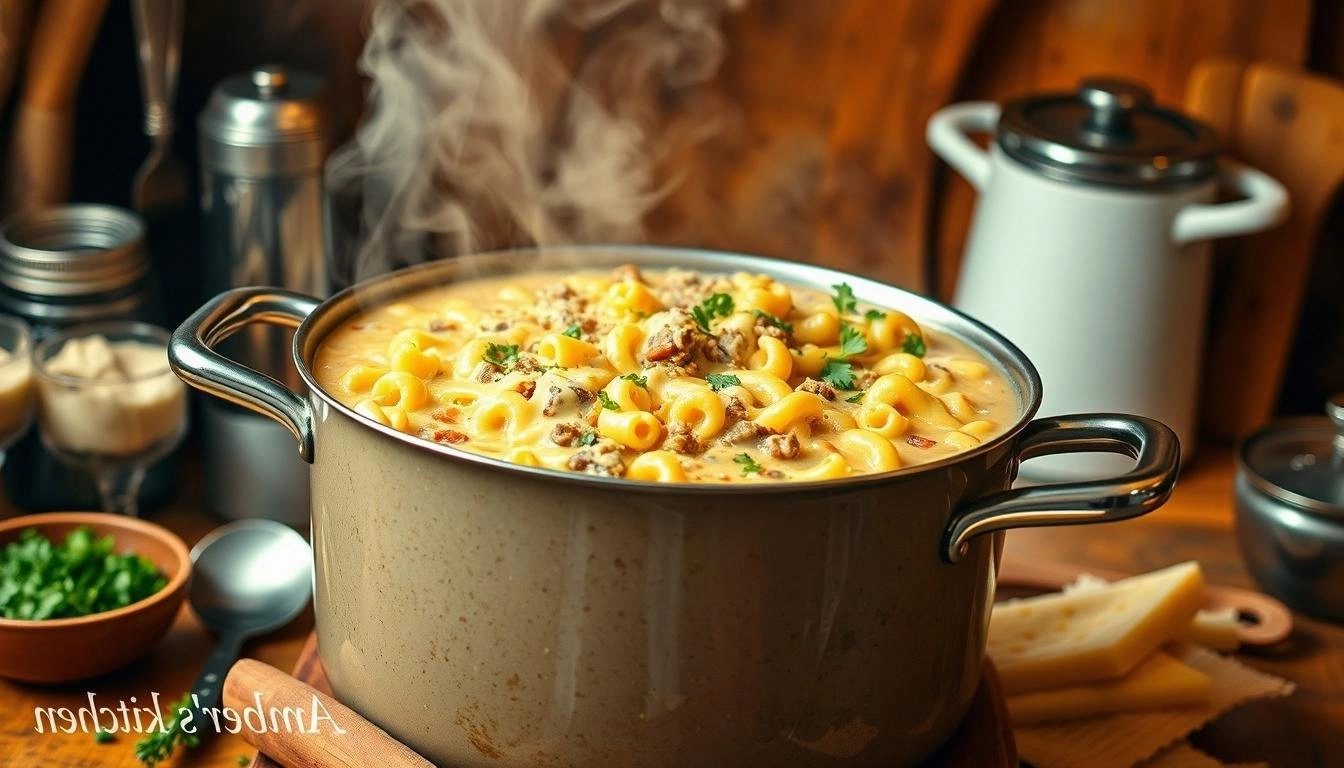
Close your eyes and imagine the golden crust forming on the beef, the subtle crunch of fresh carrots, and the faint citrusy tang of garlic. The pot exudes a thick, buttery scent that makes your mouth water even before you taste a single bite. The sound of the onions sautéing is a soft, comforting hiss that signals the beginning of something extraordinary. As the mixture bubbles, the kitchen fills with a smell so rich it could convince even the most stubborn foodie to pause their scrolling. The texture of the simmering broth is like a velvety blanket that will later cradle the pasta.
What sets this version apart is the deliberate layering of flavors and textures that mimic a cheeseburger in a single, easy pot. The beef isn’t just cooked; it’s browned to a caramelized depth that delivers a meaty umami punch. The mirepoix is diced finely to dissolve into the broth, creating a subtle sweetness that balances the savory notes. The addition of a roux made from flour and butter thickens the sauce into a silky custard that coats each noodle. Finally, the sharp cheddar melts into the mixture, turning the entire dish into a molten, gooey dream that feels like a burger in every bite.
I dare you to taste this and not go back for seconds. The moment you stir, you’ll notice that the sauce coats the pasta like velvet, leaving a trail of melted cheese on the spoon. If you’ve ever tried a sloppy joe or a mac‑and‑cheese, you’ll find this one‑pot wonder a game‑changer that combines the best of both worlds. Picture yourself pulling this out of the pot, the whole kitchen smelling incredible, and the family’s faces lighting up with pure delight. The next step? Let me walk you through every single detail — by the end, you’ll wonder how you ever made it any other way.
The secret lies in the balance of ingredients and the timing of each addition. I’ll keep you on your toes with a few micro‑challenges that will test your culinary instincts. The bold claim is simple: this is hands down the best version of a macaroni‑cheeseburger you’ll ever make at home. I’ll be honest — I ate half the batch before anyone else got to try it. If you’ve ever struggled with a one‑pot meal that ends up watery or bland, you’re not alone — and I’ve got the fix. Stay with me here — this is worth it.
Before we dive into the recipe, let’s talk about why this dish deserves a spot in your weekly rotation. It’s not just the flavor; it’s the convenience, the depth of comfort, and the way it turns an ordinary pot into a showcase of culinary confidence. The next section will break down exactly what makes this masterpiece stand out, and then we’ll get into the ingredient details that will elevate your cooking game.
What Makes This Version Stand Out
- Flavor: The beef is browned to a caramelized depth that provides a rich umami base. The mirepoix dissolves into the broth, adding a natural sweetness that balances the savory notes. The sauce is thickened with a roux that gives it a silky texture.
- Texture: The elbow macaroni holds the creamy broth like a sponge, creating a comforting mouthfeel. The cheddar melts into the sauce, turning it into a gooey, melt‑in‑your‑mouth experience. The result is a dish that feels like a burger in every bite.
- Simplicity: One pot, one pan, and a handful of ingredients make this recipe a breeze. There’s no need for separate bowls or extra dishes, saving you time and cleanup. The method is straightforward, yet the result is impressive.
- Uniqueness: Combining a classic macaroni‑cheese with a cheeseburger flavor profile is a fresh take on comfort food. The dish offers a hearty, satisfying meal that feels both nostalgic and innovative.
- Crowd Reaction: Friends and family will rave about how the flavors blend together. The dish is perfect for potlucks, family dinners, or a cozy night in. It’s a conversation starter that delivers on taste.
- Ingredient Quality: Using an 80/20 ground beef and sharp cheddar ensures the best flavor. Fresh herbs and quality broth elevate the dish beyond the ordinary. The choice of ingredients matters and shows in the final result.
- Cooking Method: The one‑pot technique locks in moisture and flavor. The method also allows for easy adjustments to spice or thickness. It’s a practical approach that doesn’t sacrifice taste.
- Make‑Ahead Potential: The soup can be made a day ahead, and the flavors deepen overnight. Reheating is quick, and the dish remains creamy and delicious. It’s an excellent option for busy schedules.
Inside the Ingredient List
The Flavor Base
Ground beef is the star of this dish, delivering a hearty, meaty foundation that echoes a classic cheeseburger. Choosing an 80/20 blend provides the perfect balance of flavor and moisture, ensuring the beef stays juicy while developing a robust crust. Skipping the beef would turn this into a plain macaroni‑cheese, losing the savory depth that makes the dish memorable. If you prefer a leaner version, use 90/10, but be prepared for a slightly drier texture.
Mirepoix, a classic French vegetable trio, adds a subtle sweetness that counterbalances the richness of the beef and cheese. Onions, carrots, and celery diced finely will break down into the broth, creating a complex flavor profile that feels like a slow‑cooked stew. If you’re short on time, you can use a pre‑made mirepoix mix or frozen diced veggies to save minutes. The mirepoix also contributes to the overall aroma, making the dish irresistibly fragrant.
The Texture Crew
Elbow macaroni is chosen for its sturdy shape, which holds up well in a creamy broth without turning mushy. The pasta’s ridges trap the sauce, ensuring each bite is coated in cheesy goodness. If you’re a fan of a smoother texture, switch to small shells or penne, but the elbow’s bite is part of the charm. Cooking the pasta al dente is essential; it allows the noodles to absorb flavor without becoming soggy.
All‑purpose flour is the secret to turning the liquid into a velvety sauce. The flour forms a roux with butter, thickening the broth and creating a silky base that clings to the noodles. If you’re avoiding gluten, try a gluten‑free flour blend, but be sure to whisk thoroughly to avoid lumps. The roux also helps the cheddar melt evenly, preventing clumps and ensuring a smooth finish.
The Unexpected Star
Heavy cream adds a luxurious, buttery richness that elevates the entire dish. It balances the sharpness of the cheddar and the savory depth of the beef, creating a harmonious flavor profile. If you’re watching calories, a half‑and‑half or low‑fat milk can substitute, though the sauce will be slightly less decadent. Adding cream also helps the sauce cling to the pasta, giving each bite a creamy burst.
Sharp cheddar cheese is the ultimate flavor enhancer, providing a tangy, melty finish that ties all the components together. Its sharpness cuts through the richness of the beef and cream, adding a bright contrast that keeps the dish from feeling heavy. For a different twist, try smoked cheddar or a blend of cheddar and mozzarella for a milder, creamier texture. The key is to use a cheese that melts well and has a strong flavor profile.
The Final Flourish
Dried herbs like oregano and thyme bring a fragrant, earthy note that echoes the classic burger seasoning. A teaspoon of each is enough to infuse the broth with a subtle herbal aroma without overpowering the other flavors. If you’re fresh‑herb enthusiasts, a sprinkle of chopped parsley or basil at the end can brighten the dish. The herbs also add a visual pop of color, making the soup more appetizing.
Garlic is the unsung hero that adds depth and aroma to the broth. Minced garlic, when sautéed with the onions, releases a fragrant perfume that lingers throughout the cooking process. If you’re sensitive to raw garlic, roast it first for a milder, sweeter flavor. The garlic’s presence is essential; without it, the dish feels flat.
Chicken broth forms the foundation of the soup, providing a savory base that supports all the other flavors. A good quality broth enhances the taste of the beef and cheese, while a low‑sodium option allows you to control the salt level. If you prefer a richer broth, use a bone broth or beef broth, but be mindful of the overall salt content. The broth’s liquid volume also determines the thickness of the final sauce.
Salt and pepper are the final seasoning that bring everything together. Adding salt to taste after the soup has simmered ensures the flavors are balanced. Pepper adds a subtle heat that complements the beef and cheese. If you’re watching sodium, use a salt substitute or reduce the amount of added salt. The seasoning is the final touch that makes the dish feel complete.
Everything’s prepped? Good. Let’s get into the real action.
The Method — Step by Step
- Heat a large, heavy‑bottom pot over medium heat and add a splash of olive oil. As the oil warms, add the ground beef in a single layer, letting it sear without stirring for 2–3 minutes. This creates a caramelized crust that locks in flavor. Flip the beef and brown the other side until it’s a deep, rich brown. Once browned, transfer the beef to a plate and set aside, leaving the drippings in the pot.
- In the same pot, add the diced mirepoix and a pinch of salt. Sauté for 5 minutes, stirring occasionally, until the onions soften and the carrots begin to turn translucent. The vegetables should emit a sweet aroma that signals they’re ready. Add the minced garlic and cook for an additional 30 seconds until fragrant. Be careful not to burn the garlic, as it will turn bitter.
- Return the browned beef to the pot, spreading it evenly among the vegetables. Sprinkle the dried oregano and thyme over the mixture, stirring to combine. This step infuses the broth with herbal depth. Let the beef and herbs cook together for 2 minutes, allowing the flavors to meld.
- Whisk the flour into the pot, coating the beef and vegetables evenly. This creates a roux that will thicken the broth. Cook for 1–2 minutes, stirring constantly, until the mixture turns a light golden color. The flour should lose its raw taste and develop a nutty aroma. This step is crucial for a creamy, velvety sauce.
- Gradually pour in the chicken broth, whisking vigorously to avoid lumps. Bring the mixture to a gentle simmer, then reduce the heat to low. The broth should bubble softly, allowing the flavors to meld. Stir occasionally to keep the roux from sticking to the bottom. This creates a smooth, rich base for the pasta.
- Add the elbow macaroni to the pot, stirring to coat the noodles with the sauce. Reduce the heat to low, cover, and let the pasta cook for 8–10 minutes, or until al dente. Stir occasionally to prevent sticking. The noodles will absorb the flavors and the sauce will thicken as they cook.
- Stir in the heavy cream and shredded cheddar cheese, letting the cheese melt into the sauce. The cream adds a silky richness, while the cheddar provides a sharp, tangy finish. Keep the heat low to prevent the cheese from separating. This step is the moment of truth, where the soup transforms into a decadent, melt‑in‑your‑mouth experience.
- Season the soup with salt and pepper to taste, adjusting the balance of flavors. If the soup feels too thick, add a splash of milk or broth to reach your desired consistency. Let the soup simmer for an additional 2 minutes, allowing the flavors to marry. Serve hot, garnished with extra cheddar or a sprinkle of fresh herbs if desired. The final result is a comforting, indulgent bowl that feels like a hug.
That’s it — you did it. But hold on, I’ve got a few more tricks that will take this to another level. The next section will share insider tips that will ensure flawless results every time.
Insider Tricks for Flawless Results
The Temperature Rule Nobody Follows
Cooking the beef on a medium‑high heat before lowering the temperature is essential for a juicy, caramelized crust. If you rush the browning, the beef will steam rather than sear, resulting in a soggy base. Keep the heat steady; a fluctuating flame can cause uneven cooking and a loss of flavor. This simple temperature control trick will elevate your dish from good to unforgettable.
Why Your Nose Knows Best
The aroma of simmering onions and garlic is your first indicator of progress. When the smell turns nutty and slightly caramelized, the roux has reached the right stage. Trust your nose; it tells you when the base is ready for broth. This sensory checkpoint saves you from overcooking or underseasoning.
The 5-Minute Rest That Changes Everything
Once the soup finishes cooking, let it sit covered for 5 minutes before serving. This rest period allows the flavors to settle and the sauce to thicken slightly. During this time, the pasta will finish absorbing the broth, creating a more cohesive texture. Skipping this step can leave the dish feeling rushed and uneven.
Layering the Cheese for Depth
Instead of adding all the cheddar at once, layer it in stages. Add half at the beginning of the cream addition, then the rest after the pasta is cooked. This technique ensures a uniform melt and prevents clumping. The result is a smooth, even coating that feels luxurious.
The Secret to a Perfectly Al Dente Noodle
Cook the pasta slightly less than the package instructions, as it will continue to cook in the soup. This pre‑cooking strategy keeps the noodles firm and prevents them from becoming mushy. Taste a noodle before you finish the soup; it should have a slight bite.
The Final Touch of Freshness
A handful of fresh parsley or a squeeze of lemon juice at the end brightens the dish. The acidity cuts through the richness, while the herbs add a fresh, herbal note. This final flourish gives the soup a lively finish that makes every spoonful delightful.
Creative Twists and Variations
This recipe is a playground. Here are some of my favorite ways to switch things up:
Spicy Jalapeño Kick
Add diced jalapeños or a splash of hot sauce during the beef browning stage. The heat pairs beautifully with the cheddar, creating a spicy, savory punch. This variation is perfect for those who love a little fire in their comfort food.
Smoked Bacon Boost
Crackling bacon pieces are sautéed with the beef for an extra smoky layer. The bacon fat infuses the broth, giving it a deep, savory undertone. Sprinkle crispy bacon bits on top before serving for a delightful crunch.
Vegan Comfort Bowl
Replace the beef with lentils or a plant‑based meat substitute. Use a dairy‑free cheddar alternative and a non‑dairy milk for the cream. The result is a hearty, plant‑based version that still feels indulgent.
Cheese Swap Delight
Swap sharp cheddar for Gruyère or a blend of cheddar and mozzarella for a milder, meltier texture. The cheese choice dramatically changes the flavor profile, offering a new experience with each bite. Experiment to find your favorite combination.
Herb‑Infused Variation
Add fresh thyme, rosemary, or basil at the end of cooking to elevate the herbaceous notes. The fresh herbs bring a bright, aromatic finish that contrasts the rich broth. This variation is ideal for spring or summer cooking.
Breakfast‑Inspired Version
Add a poached egg or a dash of maple syrup to the finished soup. The egg yolk adds richness, while the maple syrup brings a subtle sweetness that complements the beef. This twist turns the dish into a hearty breakfast bowl that’s both comforting and energizing.
Storing and Bringing It Back to Life
Fridge Storage
Cool the soup completely before transferring it to an airtight container. Store it in the refrigerator for up to 4 days. The flavors will deepen, and the sauce will thicken slightly. When reheating, add a splash of milk or broth to restore the original consistency.
Freezer Friendly
Divide the soup into single‑serving portions and freeze for up to 3 months. Thaw overnight in the refrigerator, then reheat on the stovetop or in the microwave. The pasta may absorb more liquid, so stir in a little broth before serving. Freezing preserves the taste and texture remarkably well.
Best Reheating Method
Reheat gently over low heat, stirring frequently to prevent scorching. Add a tiny splash of water or broth to help the sauce steam back to its creamy glory. The soup should reach a gentle simmer before serving. This method ensures the dish remains smooth and flavorful.