Love this? Pin it for later! 📌
Why This Recipe Works
- Buttermilk & oats: A duo that locks in moisture yet keeps the slice tender, never mushy.
- Vegetable soffritto: Finely diced onion, carrot, and celery sautéed in butter for built-in depth.
- Two-temperature bake: Start at 400 °F to set the shape, drop to 325 °F for gentle, even cooking.
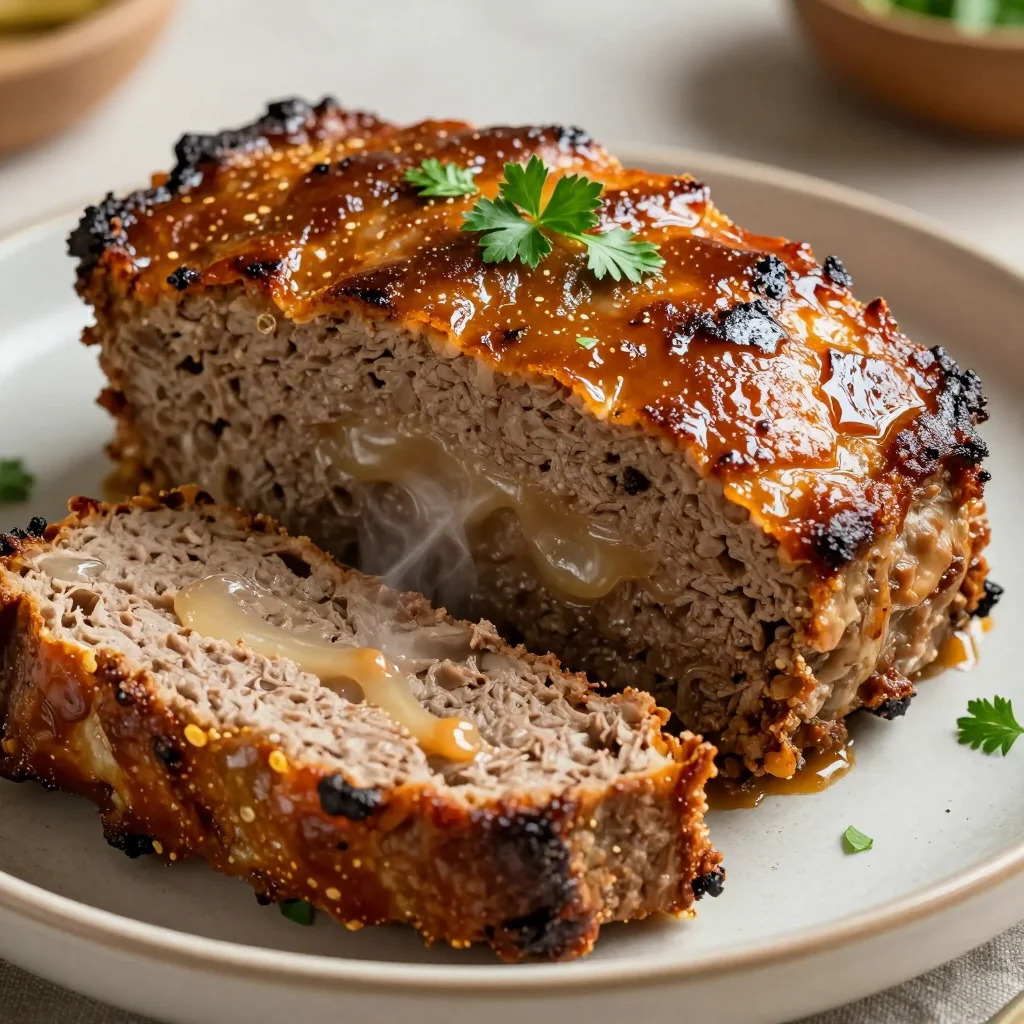
- Brown-sugar glaze double coat: First layer caramelizes into the meat; second layer goes on for the final 10 minutes for that diner-style shine.
- Freezer-friendly raw or cooked: Shape and wrap the loaf raw for up to 3 months, or bake and freeze slices for lightning-fast future dinners.
- Built-in side dish: Potatoes, carrots, and onions roast around the loaf in the same pan—one sheet-pan supper.
- Easy to scale: The recipe doubles perfectly for a 9×13-inch pan or triples for two loaves and a crowd.
Ingredients You'll Need
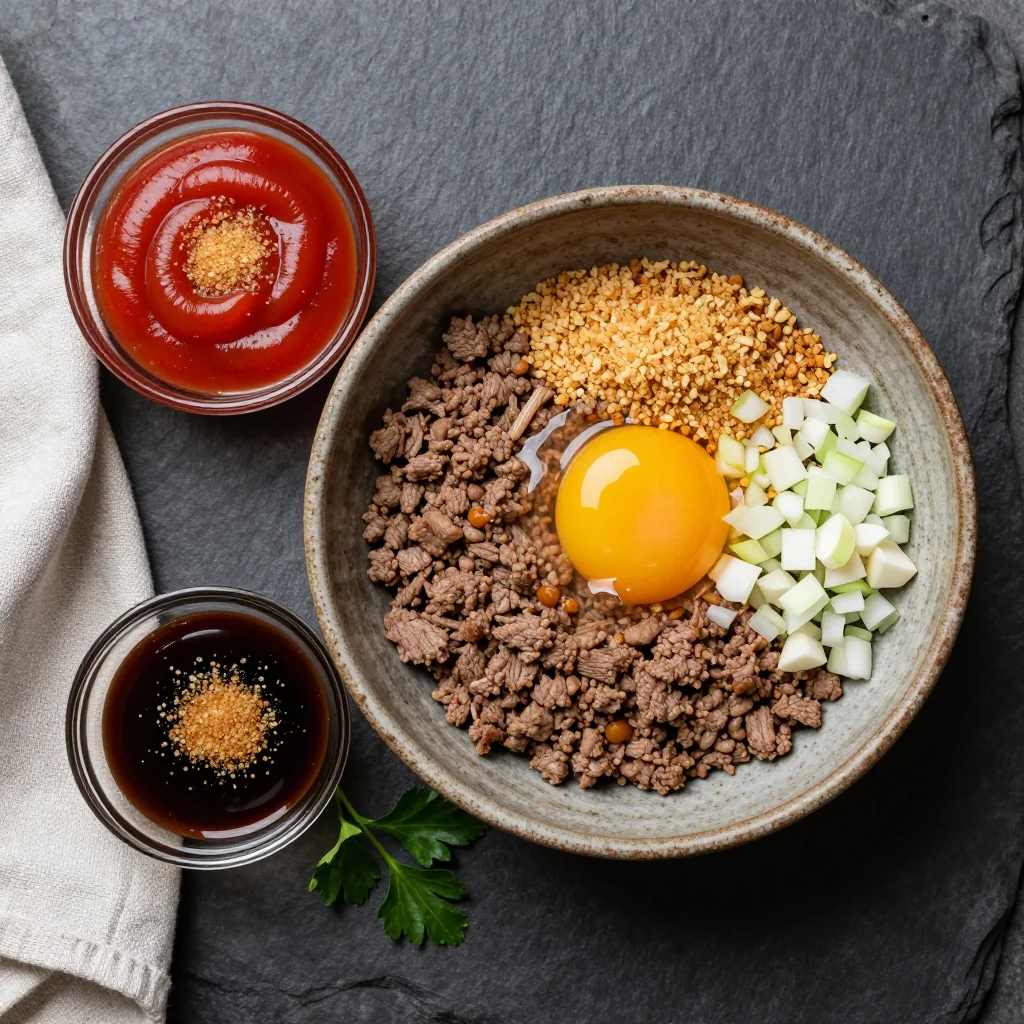
Before we talk ingredients, a quick note on sourcing. I buy ground beef that’s 80–85 % lean—enough fat for flavor, not so much that the loaf swims. If you can, ask the butcher to coarse-grind chuck fresh; the texture is noticeably bouncier. The oats should be old-fashioned, not quick-cooking—quick oats dissolve and give a pasty bite. Buttermilk is non-negotiable for tang and tenderness; if you only have milk, stir 1 tablespoon lemon juice into every cup and let it stand 5 minutes. For the glaze, use a dark brown sugar with plenty of molasses; light brown works, but you’ll miss that deep toffee note.
Ground beef – 2 lb / 900 g, 80–85 % lean. Substitute 1 lb beef + 1 lb ground pork for a sweeter, more succulent loaf.
Old-fashioned oats – ¾ cup / 75 g. Panko or fresh bread crumbs can sub in, but reduce liquid by 2 tablespoons.
Buttermilk – ½ cup / 120 ml. Whole-milk yogurt thinned with a splash of water works in a pinch.
Eggs – 2 large; they bind and emulsify.
Onion, carrot, celery – ½ cup each, minced super-fine so they melt into the meat. A food processor is your friend.
Butter – 1 tablespoon for the soffritto; olive oil is fine, but butter gives that nostalgic diner taste.
Worcestershire sauce – 2 teaspoons. Don’t skip—it’s the umami backbone.
Dijon mustard – 1 teaspoon for gentle heat and complexity.
Salt & pepper – 1 ½ teaspoons kosher salt, ½ teaspoon freshly ground black pepper.
Fresh thyme – 1 teaspoon chopped (or ½ teaspoon dried).
Garlic – 2 cloves, minced to a paste.
For the brown-sugar glaze:
Dark brown sugar – ⅓ cup / 70 g packed.
Ketchup – ¼ cup. Use a brand you like straight from the bottle.
Apple cider vinegar – 1 tablespoon for brightness.
Worcestershire – 1 teaspoon to echo the meat.
Yellow mustard – 1 teaspoon for zip.
How to Make Old Fashioned Meatloaf with Brown Sugar Glaze
Prep the soffritto
Melt butter in a small skillet over medium. Add onion, carrot, and celery with a pinch of salt; cook 5–6 minutes until translucent and sweet. Stir in garlic and thyme; cook 30 seconds. Scrape into a large bowl and let cool 5 minutes so it won’t scramble the eggs.
Make the panade
To the cooled vegetables, add oats, buttermilk, eggs, Worcestershire, Dijon, salt, and pepper. Stir until the oats are moistened and the mixture looks like chunky oatmeal. Let stand 10 minutes so the oats hydrate—this is the insurance policy against a dry loaf.
Add the meat
Break the ground beef into large chunks over the oat mixture. Using impeccably clean hands, gently fold and squeeze just until combined. Over-mixing compresses the proteins and gives a rubbery texture; stop as soon as you no longer see dry oats.
Shape on a rack
Line a rimmed sheet pan with foil and set a wire rack on top. Dump the mixture onto the rack and shape into a 9×5-inch loaf, patting gently so it’s even. The rack lets fat drip away and air circulate, eliminating the dreaded soggy bottom.
Roast the vegetables (optional but smart)
Surround the loaf with chunked potatoes, carrots, and onions tossed with olive oil, salt, and rosemary. They’ll caramelize in the beef drippings and save you a side dish.
First bake – high heat
Slide the pan into a preheated 400 °F / 200 °C oven for 20 minutes. This blast sets the exterior so the loaf holds its shape when you add the glaze.
Make the glaze
While the meatloaf starts its journey, whisk brown sugar, ketchup, vinegar, Worcestershire, and mustard in a small bowl until silky. Microwave 20 seconds to dissolve the sugar if it’s lumpy.
Glaze and lower the heat
After 20 minutes, brush the loaf with half the glaze (a silicone brush is ideal). Reduce oven to 325 °F / 160 °C and bake 25 minutes more. The lower temp gently cooks the interior without drying the edges.
Final glaze & finish
Brush the remaining glaze over the top and crank the oven back to 400 °F for the last 10 minutes. You want the glaze to bubble and caramelize in spots but not burn—keep an eye on it.
Rest before slicing
Transfer the loaf to a cutting board and tent loosely with foil. Rest 10 minutes; the juices redistribute, and the internal temp will coast to a safe 160 °F / 71 °C. Slice with a serrated knife using a gentle sawing motion for clean edges.
Expert Tips
Use a thermometer
Pull the loaf at 155 °F; carry-over heat does the rest. Over-cooking is the #1 cause of crumbly, dry meatloaf.
Chill the raw loaf
If time allows, refrigerate the shaped loaf up to 24 hours. The oats fully hydrate and flavors meld; just add 5 minutes to the initial bake.
Mini loaves = faster dinner
Divide mixture among a 12-cup muffin tin; bake 18–20 minutes total. Kids love individual “meatloaf cupcakes.”
Save the drippings
Deglaze the sheet pan with a splash of broth and a pat of butter for an instant gravy. Whisk over low heat 1 minute.
Add a surprise center
Press half the meat into the pan, lay down sliced mozzarella or boiled eggs, top with remaining meat. Every slice has a molten core.
Smoke it
Swap your oven for a 275 °F smoker with cherry wood for 1 hour, then glaze and finish at 325 °F. The smoky-sweet crust is outrageous.
Variations to Try
-
Italian-style: Swap Worcestershire for balsamic, add ½ cup grated Parmesan and a handful of chopped basil; glaze with marinara mixed with brown sugar.
-
Tex-Mex: Sub chipotle in adobo for ketchup, add cumin and corn kernels; top glaze spiked with a little hot sauce.
-
Turkey & quinoa: Use ground turkey + cooked quinoa, add grated zucchini for moisture; bake to 165 °F.
-
Low-carb: Replace oats with finely chopped mushrooms and almond flour; swap brown sugar in glaze for monk-fruit sweetener.
-
BBQ Bacon: Lay strips of bacon over the loaf; brush with your favorite barbecue sauce mixed with brown sugar for the last 10 minutes.
Storage Tips
Refrigerate: Cool leftover meatloaf completely, wrap tightly in foil or store in an airtight container up to 4 days. For best texture, reheat slices in a 300 °F oven for 10–12 minutes with a splash of broth or gravy.
Freeze cooked: Slice the cold loaf, layer parchment between slices, wrap in plastic then foil, and freeze up to 3 months. Thaw overnight in the fridge and reheat as above or microwave 60–90 seconds.
Freeze raw: Shape the loaf on a parchment-lined pan, freeze until solid, then wrap tightly. Bake from frozen at 325 °F for 1 hour 45 minutes to 2 hours, glazing as directed.
Leftover love: Crumble cold meatloaf into tomato sauce for a hearty ragù, or press into a grilled cheese with sharp cheddar and pickles—trust me on this one.
Frequently Asked Questions
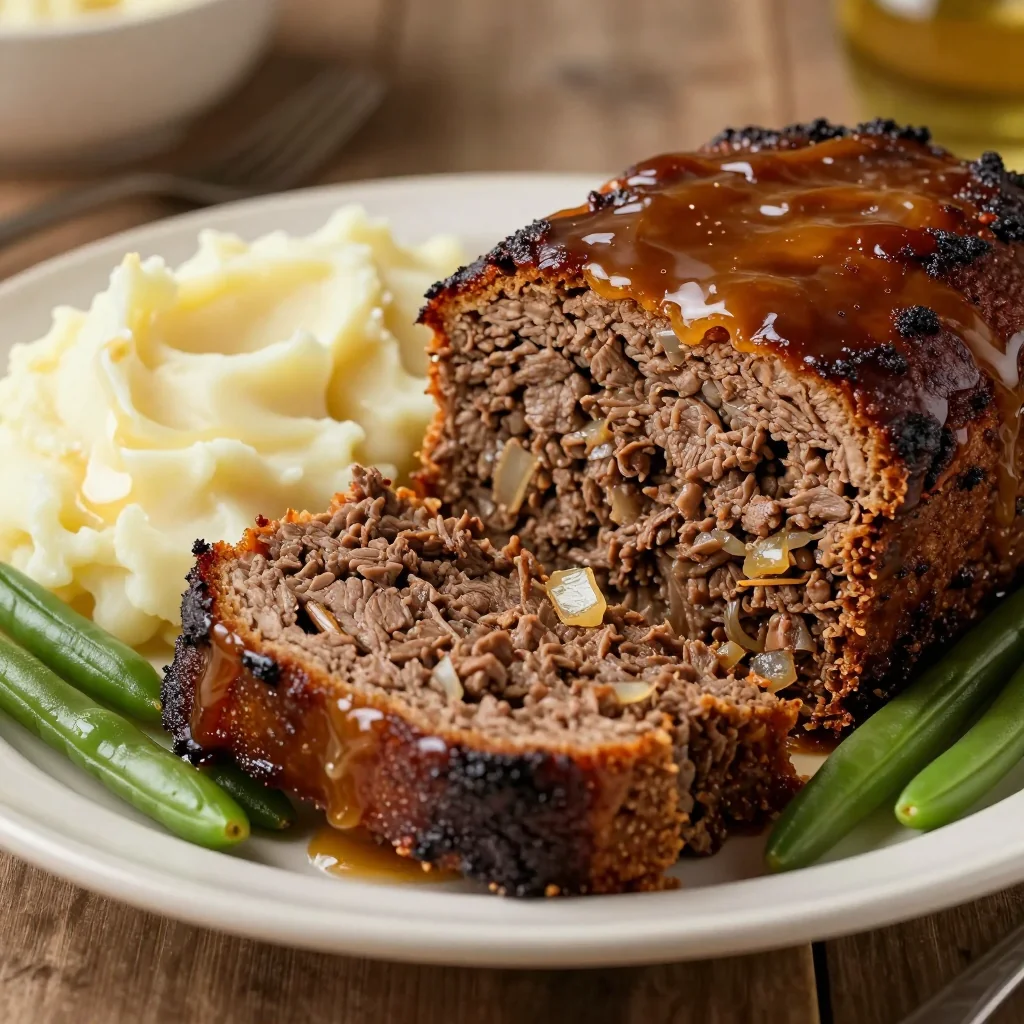
Old Fashioned Meatloaf with Brown Sugar Glaze
Ingredients
Instructions
- Sauté vegetables: Melt butter in a small skillet. Cook onion, carrot, celery with a pinch of salt 5–6 minutes. Add garlic and thyme; cook 30 seconds. Cool slightly.
- Mix panade: In a large bowl combine oats, buttermilk, eggs, Worcestershire, Dijon, salt, and pepper. Stir in cooled vegetables; let stand 10 minutes.
- Add beef: Break ground beef into chunks over mixture; gently fold just combined.
- Shape: On a foil-lined sheet with rack, form into a 9×5-inch loaf. Surround with optional vegetables.
- First bake: Bake at 400 °F for 20 minutes.
- Glaze: Mix glaze ingredients. Brush loaf with half the glaze; reduce oven to 325 °F and bake 25 minutes more.
- Finish: Brush remaining glaze; return to 400 °F for 10 minutes until caramelized. Rest 10 minutes before slicing.
Recipe Notes
Leftovers keep 4 days refrigerated or 3 months frozen. Reheat gently to avoid drying. An instant-read thermometer is your best insurance against over-cooking.