Picture this: a bright Saturday morning, the air thick with the scent of soy sauce, honey, and a hint of ginger, and you’re standing in front of a pan that’s about to become the stage for a culinary triumph. I had just burned a batch of chicken stir‑fry in a pan that had been used for a week‑old pizza, and the kitchen was a mess of burnt crumbs and a lingering, disappointing taste. I swore I’d never again let a single recipe feel like a gamble. Then I discovered the sheet‑pan version of cashew chicken that turned that disaster into a triumph of flavor and convenience.
The first time I tried it, the sizzling sound as the chicken hit the hot sheet pan was pure music—like a drum solo that announced the start of a feast. The aroma that unfurled was a sweet‑savory cloud that filled the kitchen, making the whole space feel like a cozy Asian restaurant. When I took the first bite, the sauce coated the chicken like velvet, the cashews added a satisfying crunch, and the peppers brought a bright, fresh counterpoint that balanced the richness. It was the kind of dish that made me pause, close my eyes, and think, “I dare you to taste this and not go back for seconds.”
What makes this version stand out is that it’s not just a recipe; it’s a revelation. The sheet‑pan technique locks in moisture while giving the chicken a golden, caramelized edge that shatters like thin ice when you bite. The sauce is thick enough to cling to everything yet light enough to let the veggies shine. And the cashews aren’t just a garnish—they’re a textural star that elevates the dish from simple to unforgettable. I’ll be honest—I ate half the batch before anyone else even got a bite, and my friends begged for the recipe afterward. Picture yourself pulling this out of the oven, the whole kitchen smelling incredible, and the table set for a dinner that feels both effortless and luxurious.
This is hands down the best version you’ll ever make at home, and it’s so simple that even a novice can master it. If you’ve ever struggled with the balance of sweet and savory in a stir‑fry, you’re not alone—and I’ve got the fix. Stay with me here, because this next part? Pure magic. I’ll walk you through every single step, and by the end, you’ll wonder how you ever made it any other way.
What Makes This Version Stand Out
- Flavor: The sauce is a harmonious blend of soy, honey, and rice vinegar that creates a sweet‑savory glaze that clings to the chicken and veggies like a second skin.
- Texture: The cashews add a crunchy contrast that pops against the tender chicken, while the bell peppers stay crisp and vibrant, preventing the dish from feeling mushy.
- Convenience: A single sheet pan is all you need—no need for a wok, no extra pots, and minimal cleanup.
- Visual Appeal: The colorful array of red and green peppers, pink onion, and golden chicken creates a plate that looks as good as it tastes.
- Crowd‑pleaser: Whether you’re feeding a family or hosting a dinner party, this dish receives rave reviews—most people ask for a second plate.
- Ingredient Quality: Using fresh ginger and high‑quality soy sauce elevates the flavor profile to restaurant‑level.
- Cooking Method: The sheet‑pan roasting caramelizes the sugars in the sauce, creating depth without the need for constant stirring.
- Make‑Ahead Potential: The dish holds up well in the fridge and even tastes better the next day, making it perfect for meal prep.
Inside the Ingredient List
The Flavor Base
The soy sauce is the backbone of the sauce, providing umami depth that anchors the sweetness of honey. If you skip it, the dish will taste flat and lack that savory punch. A low‑sodium soy sauce keeps the salt level in check while still delivering flavor. For a vegan twist, swap with tamari or coconut aminos.
The Sweet Counterpart
Honey brings a natural sweetness that balances the saltiness and acidity. It also helps the sauce caramelize during roasting, creating a glossy finish. If you’re avoiding honey, try maple syrup or agave nectar for a similar effect. A tablespoon of brown rice vinegar can replace the rice vinegar for a slightly sweeter finish.
The Texture Crew
Unsalted cashews add a satisfying crunch that contrasts the tender chicken and crisp peppers. They also soak up the sauce, turning each bite into a burst of nutty flavor. If you prefer a different nut, almonds or pecans work well, but the taste profile will shift slightly. Toast the cashews lightly before adding them to enhance their nutty aroma.
The Unexpected Star
Fresh ginger injects a bright, zesty note that cuts through the richness of the honey and soy. It also has natural anti‑inflammatory properties. If fresh ginger is unavailable, a teaspoon of ground ginger can be used, though the aroma will be less vibrant. A pinch of crushed red pepper can add a subtle heat that pairs beautifully with the sweet‑savory sauce.
The Final Flourish
Fresh cilantro provides a fresh, herbal finish that lifts the dish and adds a pop of color. A sprinkle of lime juice right before serving brightens the flavors and balances the sweetness. If cilantro is too strong for your palate, parsley or basil can be used as a milder alternative. The combination of garlic and onion creates a savory base that grounds the dish.
Everything's prepped? Good. Let's get into the real action…
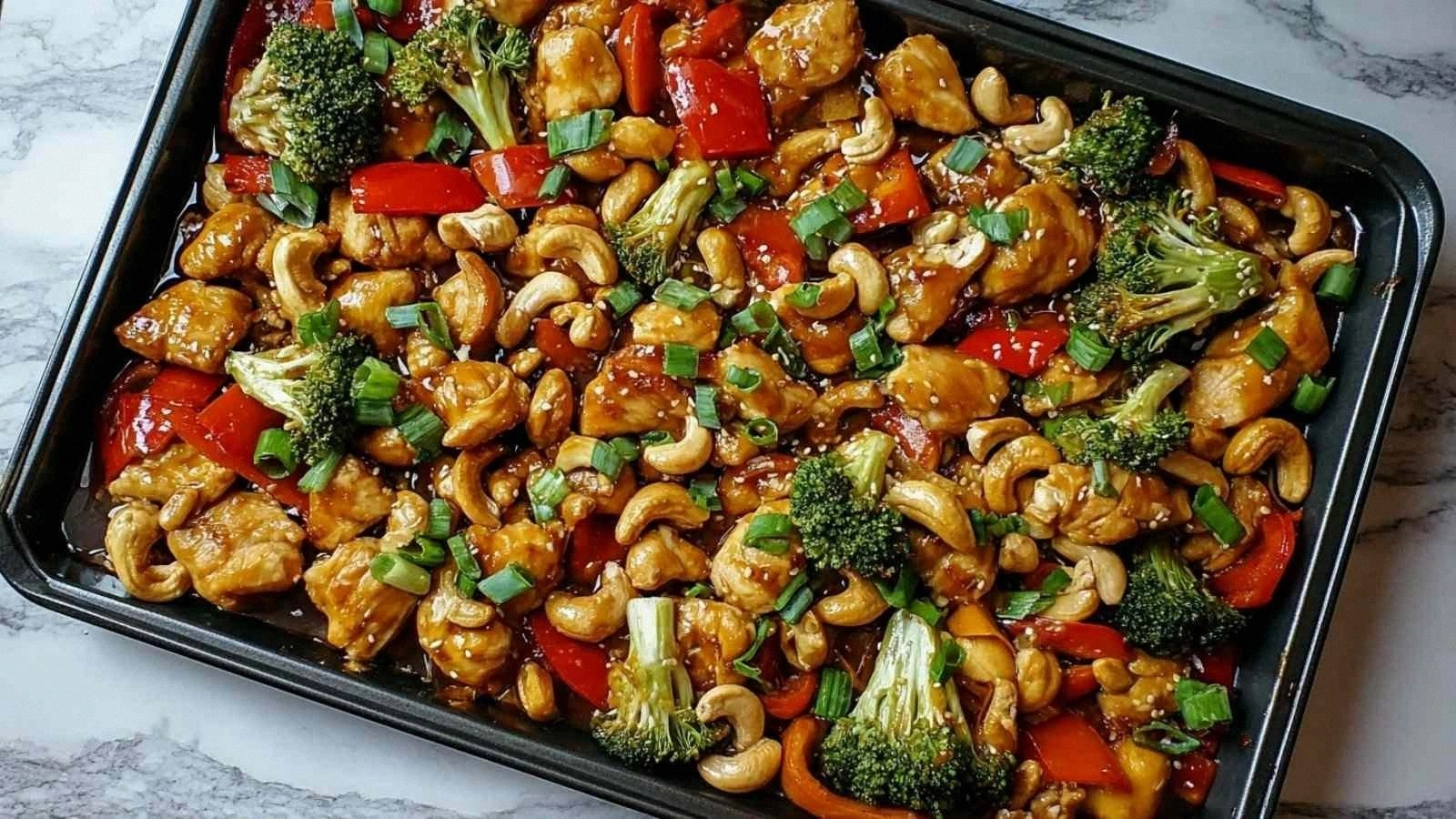
The Method — Step by Step
- Preheat your oven to 425°F (220°C). Line a large sheet pan with parchment paper or a silicone mat to prevent sticking and make cleanup effortless. Arrange a wire rack on the pan if you have one; it allows hot air to circulate around the chicken, ensuring even browning.
- Pat the chicken breasts dry with paper towels, then season both sides generously with salt and pepper. Slice the chicken into bite‑size cubes or strips—whatever fits your preference. The even size ensures uniform cooking and a consistent bite.
- In a small bowl, whisk together soy sauce, honey, rice vinegar, sesame oil, minced garlic, grated ginger, and a splash of water to thin the mixture slightly. This sauce will coat the chicken and veggies, creating a glossy glaze that caramelizes in the oven.
- Add the sliced red and green bell peppers and the quartered red onion to the pan. Toss everything gently so the sauce coats each ingredient evenly. The vegetables should be arranged in a single layer so they roast rather than steam.
- Slide the pan into the preheated oven and roast for 15 minutes. After 15 minutes, stir the mixture to promote even caramelization, then return to the oven for an additional 10–12 minutes. The chicken should reach an internal temperature of 165°F (74°C) and the edges of the veggies will start pulling away, signaling readiness.
- Once the chicken is cooked and the sauce has thickened to a glaze, remove the pan from the oven. Sprinkle the toasted cashews over the top and give everything a final gentle toss to distribute them evenly.
- Serve immediately over steamed rice or quinoa for a complete meal, or enjoy on its own as a flavorful, protein‑rich dish. The combination of sweet, savory, and nutty flavors will have everyone asking for seconds.
That's it — you did it. But hold on, I've got a few more tricks that'll take this to another level…
Insider Tricks for Flawless Results
The Temperature Rule Nobody Follows
Many cooks think a lower oven temperature is gentler, but for this dish, a high heat of 425°F (220°C) is essential to caramelize the sugars in the sauce and give the chicken a beautiful, slightly charred exterior. If your oven runs hot, you can reduce the temperature to 400°F (204°C) and extend the roasting time by 3–4 minutes. This subtle adjustment ensures the sauce thickens without scorching.
Why Your Nose Knows Best
Trust your sense of smell during the roasting stage. The moment the sauce starts to bubble and the edges of the vegetables pull away, you know the dish is ready. If the aroma feels overly sweet, it’s time to pull the pan out; if it’s still raw, give it a few more minutes. Your nose is a reliable guide that keeps the dish from turning into a burnt mess.
The 5‑Minute Rest That Changes Everything
After removing the pan from the oven, let the dish rest for five minutes before serving. This brief pause allows the juices to redistribute throughout the chicken and vegetables, ensuring each bite stays moist. It also gives the sauce a chance to thicken slightly, creating a richer glaze.
The Cashew Crunch Factor
To maximize the crunch, toast the cashews in a dry skillet over medium heat until they’re golden and fragrant, about 3–4 minutes. Stir frequently to prevent burning. If you prefer a milder nutty flavor, use raw cashews and toss them in the pan during the last 5 minutes of roasting so they crisp up in the residual heat.
The Freshness Boost
Adding a splash of lime juice or a sprinkle of fresh cilantro right before serving brightens the dish and cuts through the sweetness. The acidity balances the flavors and adds a refreshing finish that keeps the palate from feeling overwhelmed. This simple step transforms a great dish into a memorable one.
Creative Twists and Variations
This recipe is a playground. Here are some of my favorite ways to switch things up:
Spicy Szechuan
Add a tablespoon of Szechuan peppercorns and a teaspoon of chili paste to the sauce for a fiery kick that pairs perfectly with the sweet glaze. The peppercorns provide a unique numbing heat that elevates the dish to a new level of complexity.
Coconut Curry Twist
Replace the rice vinegar with coconut milk and add a teaspoon of curry powder to the sauce. The result is a creamy, fragrant dish that feels like a tropical getaway. Serve over jasmine rice for an authentic experience.
Mediterranean Flair
Swap the soy sauce for a splash of balsamic vinegar and add diced olives and sun‑dried tomatoes. The acidity of the balsamic and the briny olives create a Mediterranean vibe that’s both refreshing and bold.
Vegan Version
Use a plant‑based protein like tofu or tempeh instead of chicken. Press the tofu to remove excess moisture and marinate it in the sauce before roasting. The tofu will absorb the flavors and provide a satisfying texture.
Gluten‑Free Upgrade
Make sure your soy sauce is gluten‑free or use tamari. Pair the dish with quinoa or cauliflower rice to keep it completely gluten‑free while still delivering a hearty meal.
Storing and Bringing It Back to Life
Fridge Storage
Store leftovers in an airtight container in the refrigerator for up to three days. The sauce will thicken slightly, so reheat gently to re‑melt the glaze. This makes it easy to have a quick, nutritious meal on a busy weekday.
Freezer Friendly
Pack the dish in a freezer‑safe container or zip‑lock bag and freeze for up to two months. Thaw overnight in the refrigerator before reheating. The flavors remain robust, and the cashews retain their crunch when reheated properly.
Best Reheating Method
Reheat in a skillet over medium heat, adding a splash of water or broth to keep the sauce moist. Stir frequently until heated through. A tiny splash of water before reheating steams the dish back to perfection, preventing the sauce from becoming too thick.
Add a quality‑saving trick: before reheating, drizzle a teaspoon of sesame oil over the dish to restore its glossy sheen and nutty aroma.